Easy French Toast Casserole (Make-Ahead Breakfast Bake)
Saturday, 8:40 a.m. The coffee is barely done, someone is padding downstairs in socks, and the first question of the day lands before you’ve had a sip: what’s for breakfast? Nobody wants a full cooked spread. They want something sweet and warm to pick at while the morning wakes up slowly. Standing over a skillet flipping slices four at a time is not the answer. A French toast casserole is.
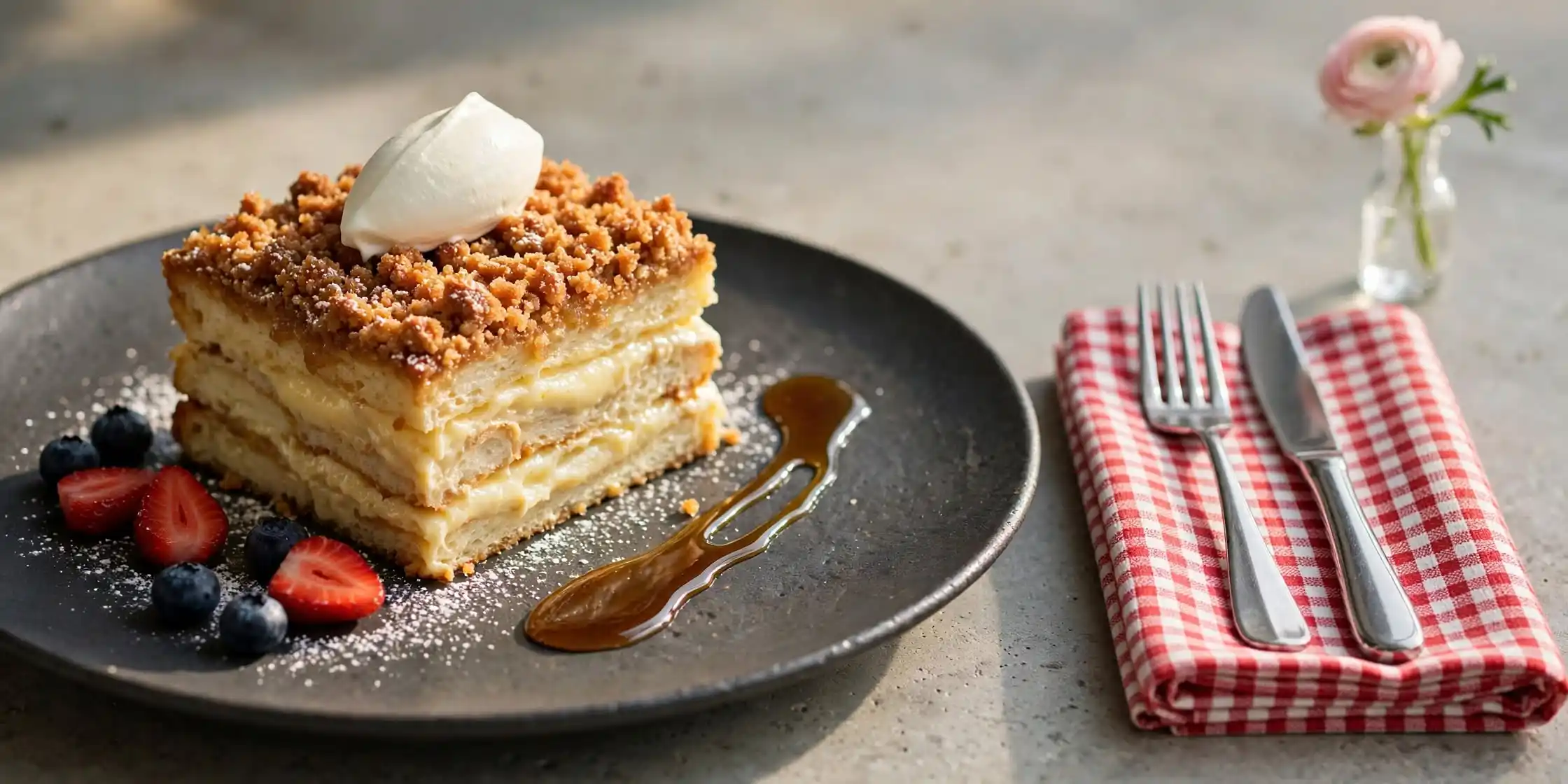
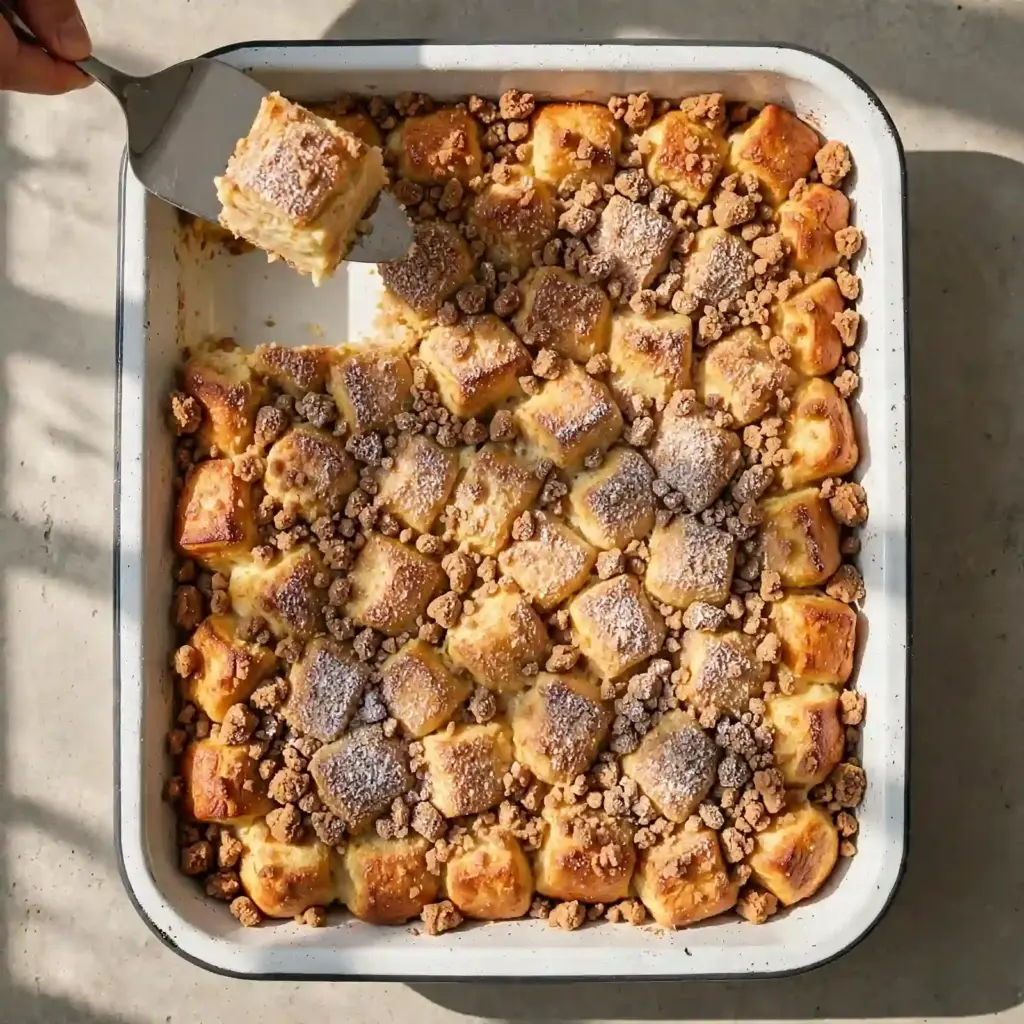
You build this French toast casserole the night before, slide it into the oven while you pour your first cup, and soon the whole kitchen smells like cinnamon, butter, and warm vanilla. The top bakes up crackly with brown-sugar crumble, while the bread underneath stays soft and custardy, like a lighter cousin of bread pudding. Scoop it into bowls, drizzle on maple syrup, and nobody waits for a second batch.
Below you’ll find everything that makes it work, from choosing the right bread to knowing exactly when the center is set.
Why This Recipe Works
- It’s fully make-ahead, because the bread soaks overnight and your only morning job is turning on the oven.
- Day-old bread holds its shape, since dry cubes drink up custard without collapsing into mush.
- Milk and cream together create a silky custard, which sets smoothly instead of tasting eggy.
- Baking covered first, then uncovered, cooks the middle through, so your French toast casserole never comes out golden on top and raw underneath.
- The streusel goes on halfway, which keeps it crisp instead of steaming under foil.
- One 9×13 dish feeds a crowd, which makes a French toast casserole ideal for holidays, sleepovers, and brunch with friends.
Ingredient Notes
- Brioche or challah: The backbone of any good French toast casserole; rich egg breads stay tender after soaking. Buy an unsliced loaf so you can cut thick, even cubes.
- Eggs: Bind the custard and help it set. Use large eggs for the ratio below.
- Whole milk: The main liquid. Skim or low-fat milk makes the bake watery.
- Heavy cream: Adds richness and gives the custard a smooth, sliceable set.
- Granulated sugar: Lightly sweetens the custard; most of the sweetness comes from the topping and syrup.
- Pure vanilla extract: Rounds out the egg flavor. Imitation vanilla tastes flat here.
- Ground cinnamon and nutmeg: The classic warm spice pairing. Freshly grated nutmeg is stronger, so use a little less.
- Salt: Sharpens the sweetness so the custard doesn’t taste one-note.
- Flour, brown sugar, and cold butter (topping): Make the crumbly streusel. The butter must be cold to form clumps.
- Maple syrup: For serving; real maple syrup pairs best with the cinnamon custard.
Substitutions Table
| Ingredient | Substitute | Effect on Result |
|---|---|---|
| Brioche or challah | French bread or Texas toast | Chewier, slightly less rich; dry it well first |
| Heavy cream | Half-and-half | Lighter custard, slightly softer set |
| Whole milk | Oat milk or almond milk (unsweetened) | Works, but the custard is less creamy |
| Granulated sugar | Maple syrup (same amount) | Deeper caramel flavor, slightly softer texture |
| Brown sugar (topping) | Coconut sugar | Similar crunch, a little less molasses flavor |
| Butter (topping) | Cold vegan butter sticks | Same crumble, slightly less buttery taste |
Equipment Needed
- 9×13-inch baking dish: The standard size for a French toast casserole. Glass or ceramic bakes most evenly; metal browns the edges faster, so check early.
- Serrated bread knife: Gives clean cubes without squashing the loaf.
- Large mixing bowl and whisk
- Aluminum foil: Covers the dish for the first half of baking.
- Instant-read thermometer (optional): Takes all the guessing out of doneness.
Step-by-Step Directions
1. Cube and Dry the Bread
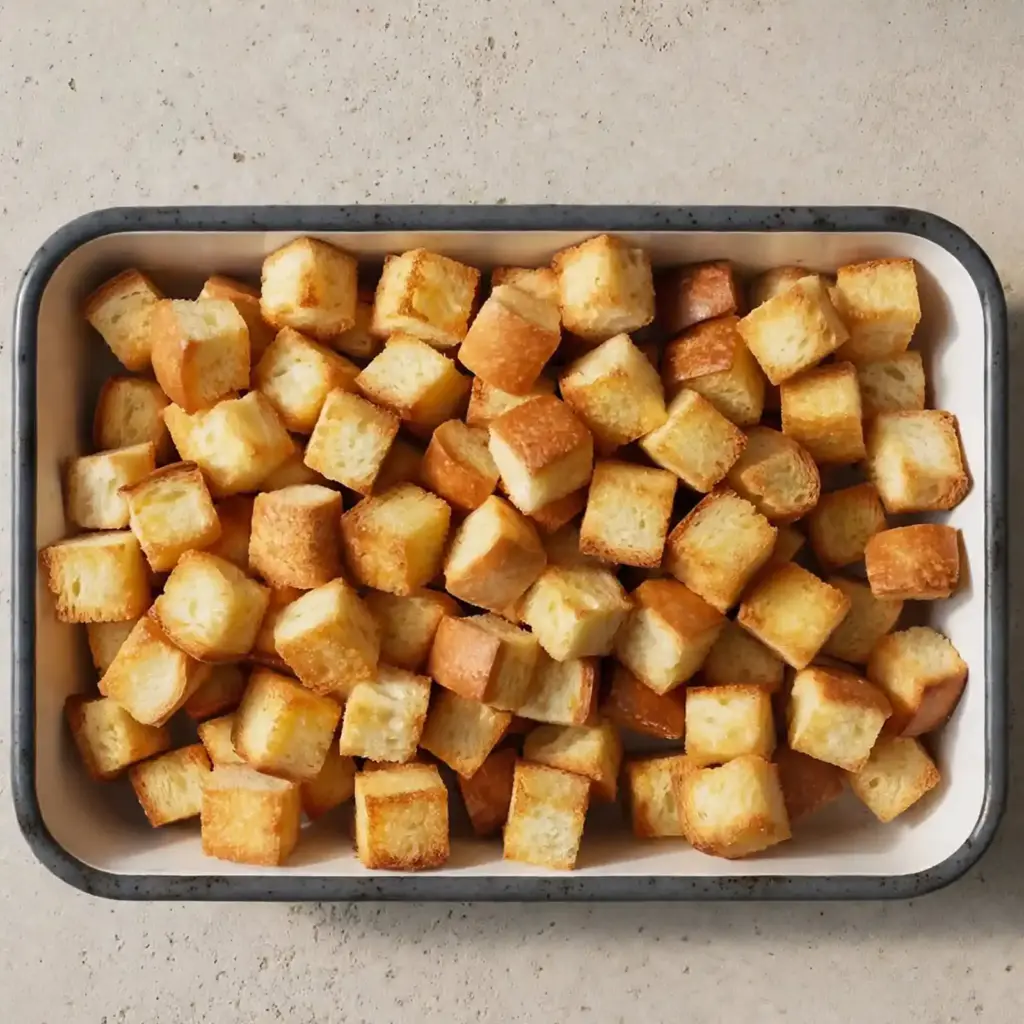
Cut the loaf into 1-inch cubes. If the bread is fresh, spread the cubes on a sheet pan and toast at 300°F for 10–12 minutes.
Why: Dry bread absorbs custard evenly and keeps its shape, while fresh bread turns soggy.
2. Fill the Baking Dish
Butter the 9×13 dish generously and spread the bread cubes in an even layer.
3. Whisk the Custard
In a large bowl, whisk the eggs, milk, cream, sugar, vanilla, cinnamon, nutmeg, and salt until completely smooth.
How to know: No streaks of egg white should remain, or they’ll bake into white patches.
4. Pour and Press
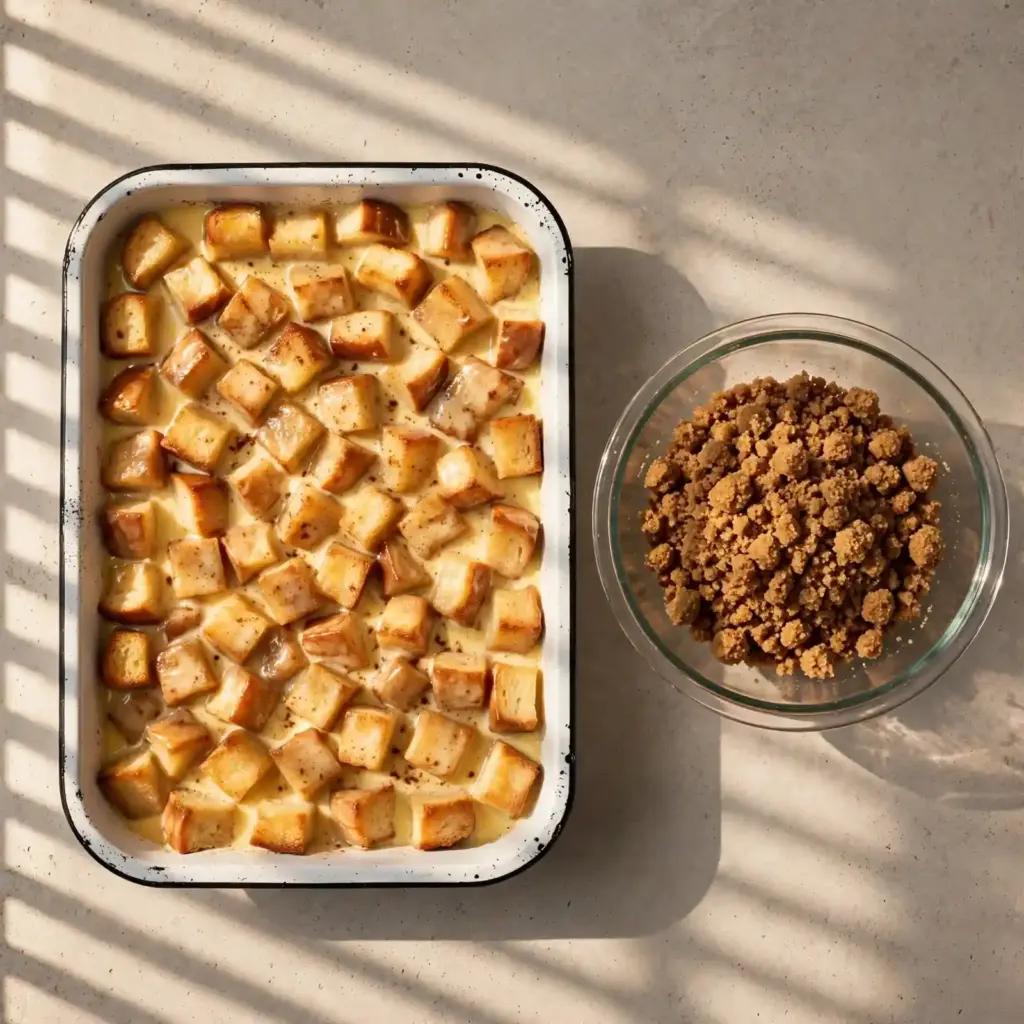
Pour the custard slowly over the bread, covering every corner. Press the cubes down gently with a spatula.
Why: Cubes that sit above the custard bake dry and hard.
5. Let It Soak
Cover the dish and refrigerate for at least 1 hour, or overnight (8–12 hours) for the most custardy French toast casserole.
6. Make the Streusel
Mix the flour, brown sugar, and cinnamon, then cut in the cold butter with a fork or your fingertips until it forms pea-sized clumps. Refrigerate until needed.
7. Bake Covered
Take the dish out of the fridge 20–30 minutes before baking and preheat the oven to 350°F. Cover with foil and bake for 30 minutes.
Why: A cold glass dish going straight into a hot oven can crack, and the foil lets the center cook before the top browns.
8. Add Topping and Finish Uncovered
Remove the foil, scatter the streusel evenly, and bake another 20–25 minutes until puffed and deep golden.
How to know: A knife in the center comes out with no liquid egg, or the center reads 160°F.
9. Rest Before Serving
Let the French toast casserole rest for 10 minutes so the custard settles and slices cleanly.
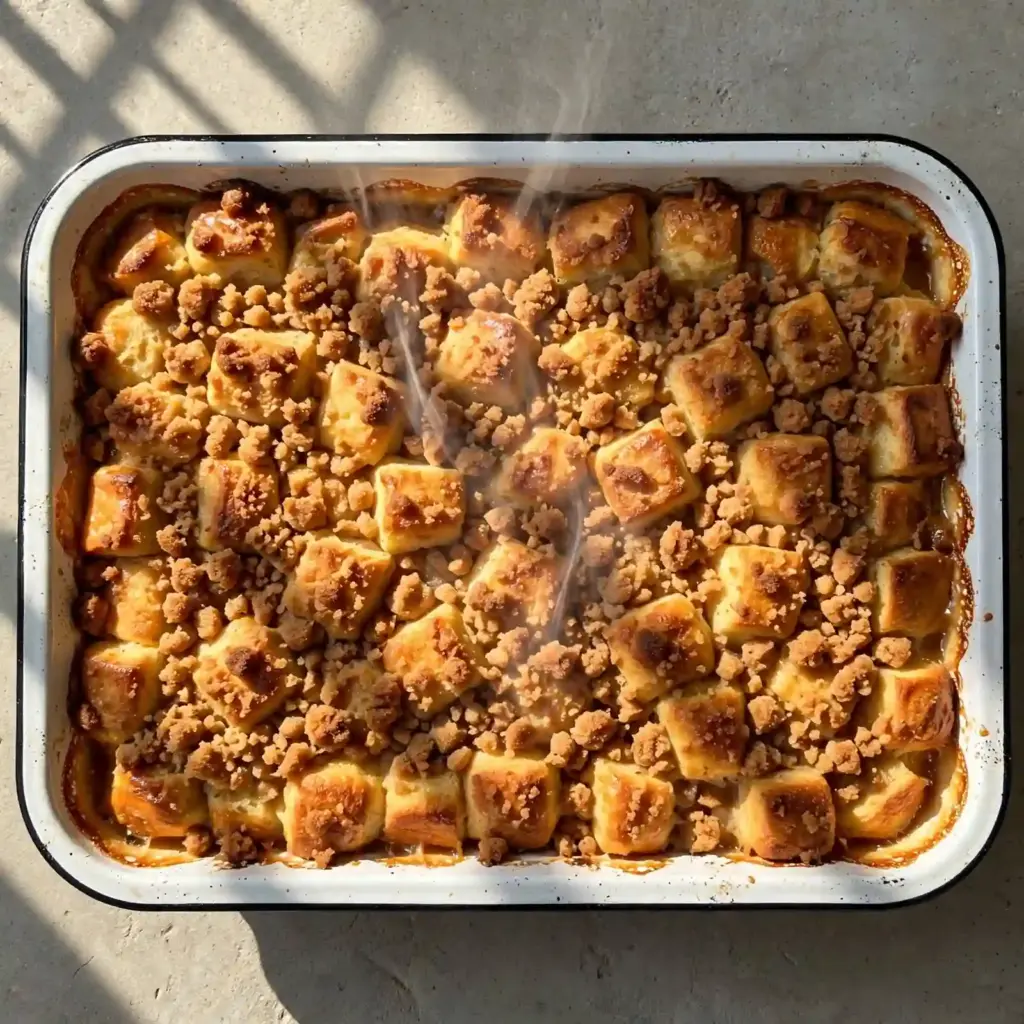
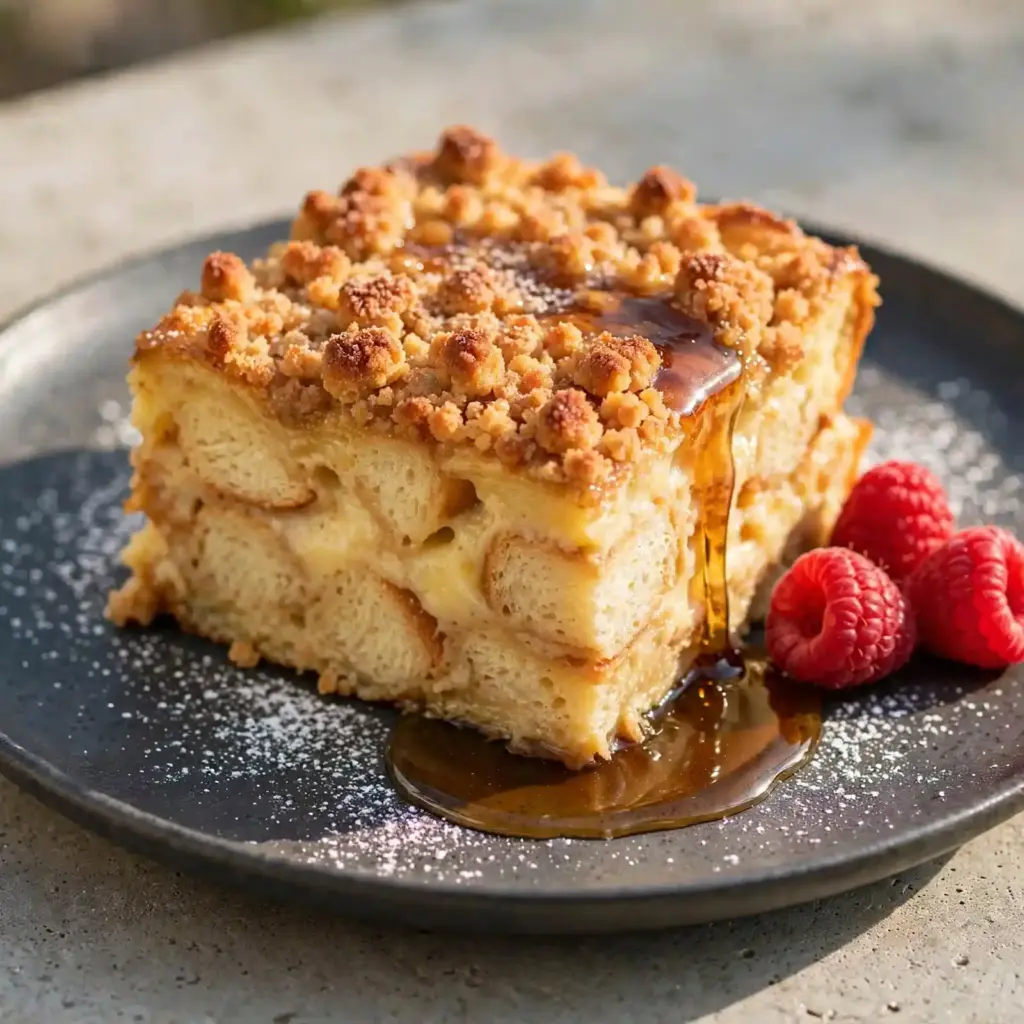
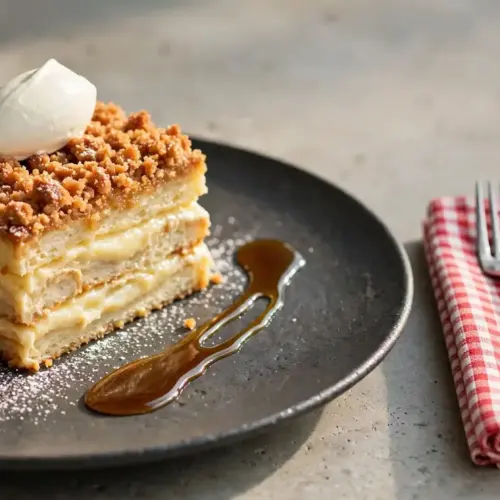
Easy French Toast Casserole (Make-Ahead Breakfast Bake)
Ingredients
For the casserole:
- 1 loaf 16 oz brioche or challah, cut into 1-inch cubes (about 10 cups)
- 8 large eggs
- 2 cups whole milk
- 1 cup heavy cream
- ⅓ cup granulated sugar
- 2 teaspoons pure vanilla extract
- 1½ teaspoons ground cinnamon
- ¼ teaspoon ground nutmeg
- ¼ teaspoon salt
- 1 tablespoon butter for greasing
For the streusel topping:
- ½ cup all-purpose flour
- ½ cup packed light brown sugar
- 1 teaspoon ground cinnamon
- 6 tablespoons cold unsalted butter cubed
For Serving:
- Maple syrup
Instructions
- Toast the bread cubes at 300°F for 10–12 minutes if fresh. Butter a 9×13-inch baking dish and spread the cubes evenly inside.
- Whisk the eggs, milk, cream, sugar, vanilla, cinnamon, nutmeg, and salt until smooth. Pour over the bread and press the cubes down gently.
- Cover and refrigerate for at least 1 hour or up to 12 hours.
- Mix the flour, brown sugar, and cinnamon. Cut in the cold butter until clumpy. Refrigerate.
- Let the dish sit at room temperature for 20–30 minutes. Preheat the oven to 350°F.
- Bake covered with foil for 30 minutes. Uncover, sprinkle with streusel, and bake 20–25 minutes more, until golden and set in the center (160°F).
- Rest 10 minutes. Serve warm with maple syrup.
Notes
- An overnight soak gives French toast casserole its softest, most custardy texture.
- If the top browns too fast, loosely tent with foil for the last 10 minutes.
- Leftovers keep in the fridge for up to 4 days.
Tips for the Best Results
Ingredient Tips
- Use bread that’s one or two days old; it soaks up custard without falling apart.
- Keep the streusel butter cold until the moment it goes on the dish.
- Bring the eggs to room temperature if you’re baking the same day, so they whisk smoothly into the milk.
Mixing Tips
- Whisk the custard for a full minute; undissolved egg white shows up as rubbery patches.
- Pour the custard in a slow spiral from the edges toward the middle so the corners don’t stay dry.
- Leave the streusel clumpy rather than sandy for a crunchier top.
Baking Tips
- Bake on the middle rack so the bottom doesn’t overbrown.
- Start checking doneness 5 minutes early if you’re using a metal pan.
- Judge it by its center, not its edges, since the edges always set first.
Troubleshooting Guide
Why is my French toast casserole soggy in the middle?
The bread was too fresh or the center was underbaked. Dry the cubes before soaking and bake until the center reaches 160°F.
Why does my French toast casserole taste eggy?
Too many eggs for the amount of dairy, or the custard wasn’t whisked well. Stick to the 8 eggs and 3 cups of dairy ratio and whisk until fully smooth.
Why did the top burn before the center was done?
The dish went in uncovered or the oven runs hot. Bake covered for the first 30 minutes and tent with foil if it browns too fast.
Why are the top bread cubes dry and hard?
Those cubes weren’t sitting in custard. Press the bread down after pouring and once more before baking.
Why is there liquid at the bottom of the dish?
The custard didn’t fully set. Return it to the oven for 5–10 minutes and check the center again.
Flavor Variations
Blueberry
Scatter 1½ cups of fresh or frozen blueberries between the bread cubes for a fruity blueberry French toast casserole.
Cinnamon Roll Style
Dot 4 oz of softened cream cheese over the bread and finish with a quick powdered-sugar glaze after baking.
Pecan Praline
Add ¾ cup chopped pecans to the streusel for a toasty, candied crunch.
Apple Pie
Fold in 2 diced apples sautéed in butter and cinnamon until just soft.
Pumpkin Spice
Whisk ¾ cup pumpkin purée and 1 teaspoon pumpkin pie spice into the custard for a fall version of this French toast casserole.
Serving Options
Maple Syrup and Fresh Berries
A drizzle of warm maple syrup and a handful of strawberries keeps things simple and bright.
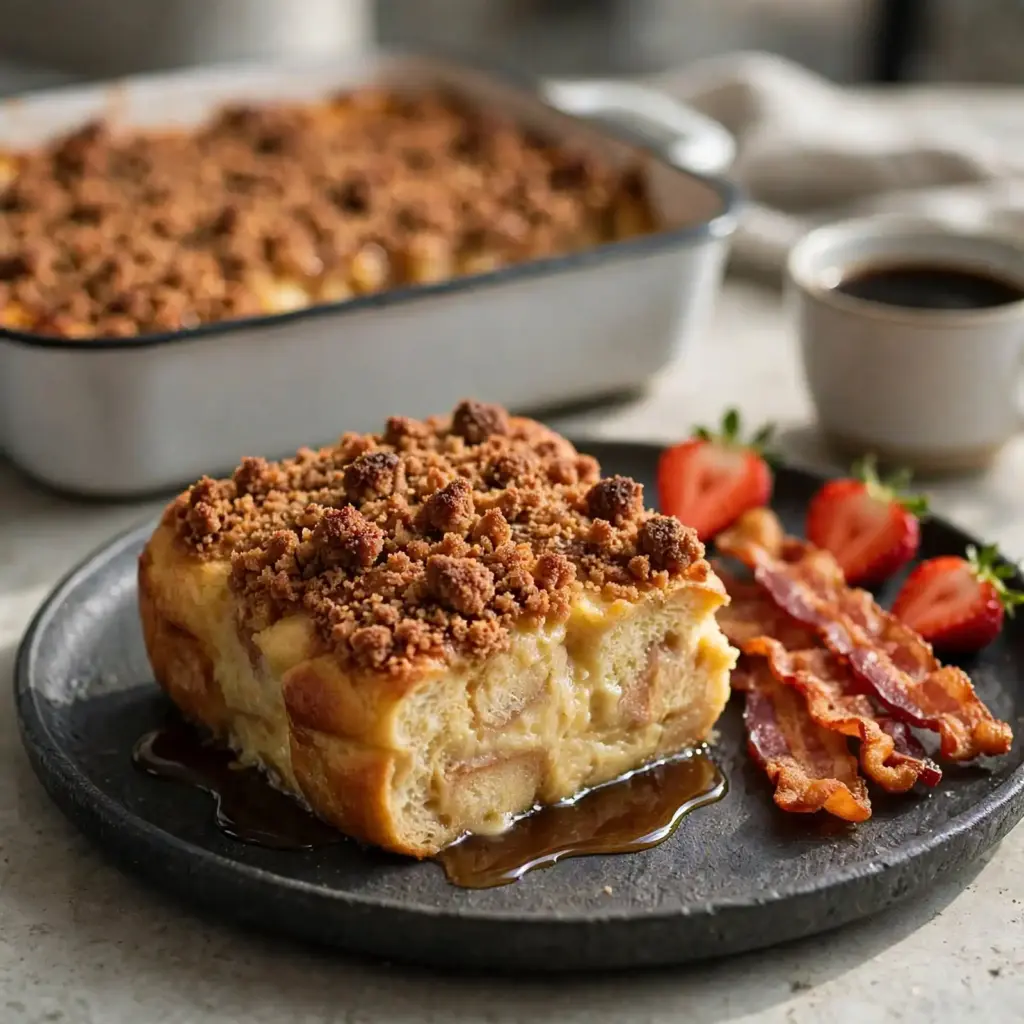
Crispy Bacon or Sausage on the Side
Something salty next to each sweet, custardy square of French toast casserole balances the whole plate.
Whipped Cream and Powdered Sugar
Turn breakfast into a brunch dessert with a cloud of lightly sweetened whipped cream.
Greek Yogurt and Sliced Banana
A tangy scoop of yogurt cuts through the richness for a lighter-feeling bowl.
Brunch Board Centerpiece
Set the dish in the middle of a spread with fruit, scrambled eggs, and coffee, and let everyone help themselves.
Storage and Freezing
Room Temperature Storage
Don’t leave it out for more than 2 hours, since it’s made with eggs and dairy. Cover leftovers and refrigerate for up to 4 days, then reheat individual portions in the microwave for 45–60 seconds or in a 350°F oven for 10–15 minutes.
Freezing
Cool baked French toast casserole completely, cut it into portions, and wrap each one tightly in plastic wrap and foil. Freeze for up to 3 months for the best texture, following USDA guidance on freezing food. You can also freeze the assembled, unbaked dish (without streusel) for up to 1 month.
Thawing
Thaw portions overnight in the fridge, then reheat until warmed through. For an unbaked frozen casserole, thaw in the fridge for 24 hours, add the streusel, and bake as directed, adding 5–10 minutes if the center is still cold.
Frequently Asked Questions
Can I make it the night before?
Yes, and it’s actually the best way to make it. An overnight soak lets the bread absorb the custard completely, giving you a softer, more even texture. Just keep the streusel separate in the fridge and add it halfway through baking.
What is the best bread for this recipe?
Brioche and challah are the top choices because they’re rich and sturdy. French bread works too if you like a chewier bite. Whatever you choose, make sure it’s a little stale or toasted first.
Can I use regular sandwich bread?
You can, but it’s softer and thinner, so it turns mushy more easily. Toast the cubes well and shorten the soak to about an hour.
How do I know when it’s done baking?
The center should be puffed and no longer jiggly, and a knife inserted there should come out without liquid egg. An instant-read thermometer should read 160°F in the middle, which is the safe internal temperature for egg dishes.
Can I make it without heavy cream?
Yes. Replace the cream with half-and-half or more whole milk. The custard will be a little lighter but still sets well.
How many people does a French toast casserole serve?
This recipe makes about 10 generous servings, or 12 smaller ones alongside eggs and bacon.
Can I halve the recipe?
Absolutely. Halve every ingredient, use an 8×8-inch dish, and start checking for doneness about 10 minutes sooner.
Related Recipes
If this cozy bake hit the spot, here are a few more sweet breakfast ideas to try next: