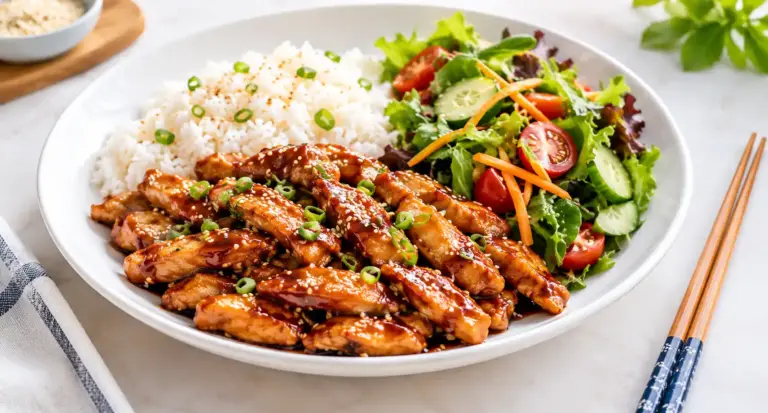
Chicken Spaghetti Recipe
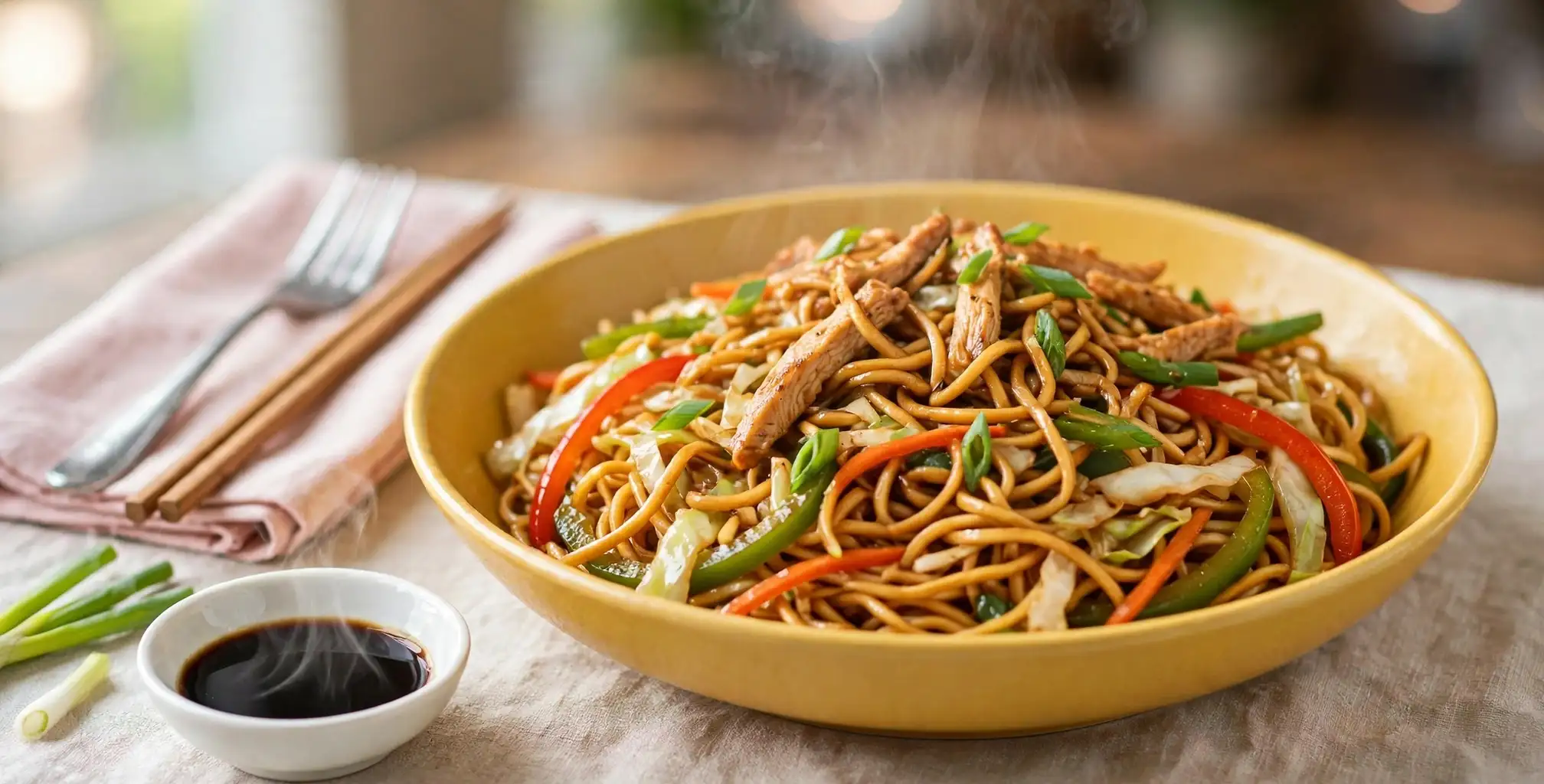
Picture a Saturday when the house fills up fast: family spread across the sofa, a couple of friends who “just dropped by,” and every one of them ready for a proper, filling meal. That’s when this chicken spaghetti recipe earns its spot on my stove. I’ve cooked it for crowded tables like that again and again, adjusting the sauce each time, until the friends who used to ask what was for dinner started asking for this dish by name. The noodles come out glossy and amber, wrapped in a sweet, savory, gently fiery sauce, with tender chicken and carrots, cabbage, and bell pepper that still have a satisfying crunch. And the scent of garlic and sesame hitting a hot wok is what pulls everyone into the kitchen. Make it for a casual get-together, a movie night with friends, or a big Sunday lunch when everyone’s home.
Here’s how to make this chicken spaghetti recipe exactly the way I do.
Why This Recipe Works
Here’s why this chicken spaghetti recipe turns out right every single time.
- The chicken stays tender, because a pinch of baking soda in the marinade relaxes the meat the way restaurant “velveting” does.
- Every strand gets flavored, since the spaghetti is tossed with aromatic garlic oil before the sauce goes in.
- The vegetables stay crunchy, because they’re stir-fried separately and only added at the end.
- The sauce hits every note at once: soy and oyster sauce for savoriness, chili sauce for heat, sugar for balance, and sesame oil for a nutty finish.
- It’s weeknight-friendly, since the chicken marinates while the pasta water comes to a boil.
- It feeds a crowd cheaply, because this chicken spaghetti recipe stretches 300g of chicken across four generous plates with vegetables.
Ingredient Notes
- Spaghetti: The base of the dish. Regular durum wheat spaghetti holds up best to tossing; avoid angel hair, which breaks.
- Boneless chicken: Breast or thigh cut into thin strips so it cooks in minutes. Thigh stays juicier if you tend to overcook.
- Soy sauce: Adds salt and color to both the marinade and the sauce. Use regular (light) soy sauce, not dark.
- Vinegar: Brightens the marinade and helps season the chicken. Plain white vinegar works perfectly.
- White pepper powder: Gives the gentle, earthy heat typical of Asian-style noodles. Black pepper works but tastes sharper.
- Garlic powder: Seasons the chicken from the inside before fresh garlic joins later.
- Baking soda: The tenderizing secret. Use only ¼ teaspoon; more leaves a soapy taste.
- Chili sauce: Red chili sauce (the sweet-hot ketchup style) brings tang and color.
- Chili garlic sauce: Adds punchy heat and texture. Sambal oelek-style jars are easy to find in US stores.
- Oyster sauce: Deep, savory body that makes the sauce cling to the noodles.
- Sesame oil: Toasted sesame oil for aroma. It’s a flavoring oil, not for high-heat frying.
- Sugar: Balances the salt and vinegar; don’t skip it.
- Carrots, bell pepper (capsicum), cabbage: Color, sweetness, and crunch. Cut them thin so they cook in two minutes.
- Fresh garlic and green onions: The fragrant base of the final stir-fry and a fresh finish on top.
Substitutions Table
| Ingredient | Substitute | Effect on Result |
|---|---|---|
| Spaghetti | Linguine or lo mein noodles | Similar texture; lo mein feels more takeout-style |
| Boneless chicken | Shrimp or thin beef strips | Shrimp cooks faster; beef adds a richer flavor |
| White pepper powder | Black pepper powder | Slightly sharper, more visible specks |
| Oyster sauce | Hoisin sauce | Sweeter, darker sauce |
| Chili garlic sauce | Sriracha | Smoother heat, less garlic bite |
| Vinegar | Rice vinegar | Milder, slightly sweeter marinade |
| Sugar | Honey | Softer sweetness, a touch stickier |
| Cabbage | Bean sprouts or bok choy | Lighter crunch, cooks even faster |
Equipment Needed
- Large pot for boiling the spaghetti
- Colander
- Mixing bowl for the marinade
- Small bowl for the sauce
- Wok or large, deep skillet (a wide pan lets you toss without spilling and keeps the vegetables from steaming)
- Tongs or two spatulas for tossing the noodles evenly
Step-by-Step Directions
This chicken spaghetti recipe moves quickly once the pan is hot, so have everything chopped and the sauce mixed before you start stir-frying. Exact quantities are in the recipe card below.
1. Marinate the chicken
Toss the chicken strips with soy sauce, vinegar, white pepper, garlic powder, and salt, then mix in the baking soda and let it rest for 15 minutes.
Why it matters: Starting the marinade first means it’s ready by the time your spaghetti is cooked.
2. Boil the spaghetti
Cook the spaghetti in generously salted boiling water until just al dente, then drain well.
How to know: It should still have a slight bite, since it cooks a little more in the wok.
3. Cook the chicken
Heat 1 tablespoon of oil in the wok, add the marinated chicken, and stir-fry for 4–5 minutes until cooked through and lightly golden. Remove and set aside.
Why it matters: Spread the strips out in one layer so they sear instead of boiling in their own juices.
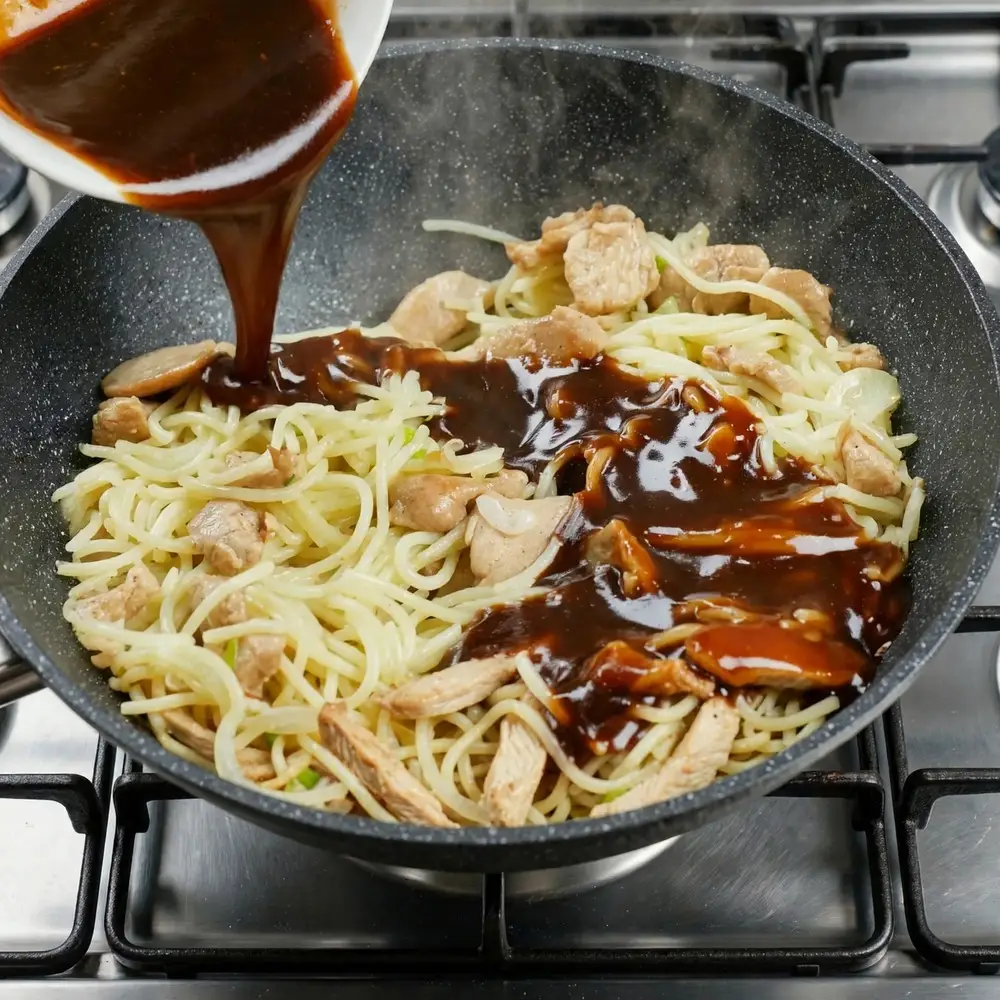
4. Mix the chowmein sauce
Stir together the soy sauce, chili sauce, chili garlic sauce, oyster sauce, sesame oil, sugar, salt, and black pepper until the sugar dissolves.
Why it matters: Pouring in a premixed sauce coats the noodles evenly in seconds and keeps the pan from cooling down.
5. Stir-fry the vegetables
Heat 1–2 tablespoons of oil, add the carrots, bell pepper, and cabbage, and sauté on high heat for 2 minutes. Set aside.
How to know: The colors should look brighter and the cabbage just starting to soften at the edges, still crunchy.
6. Build the garlic base
Add 2–3 tablespoons of oil to the wok, fry the sliced garlic for about a minute, then add the sliced spring onions and sauté for another minute.
Why it matters: Keep the heat at medium here; burnt garlic turns bitter and flavors the whole dish.
7. Add spaghetti and chicken
Add the boiled spaghetti and toss it through the garlic oil, then return the cooked chicken and give it a gentle mix.
How to know: Every strand should look lightly glossy before the sauce goes in.
8. Sauce and vegetables
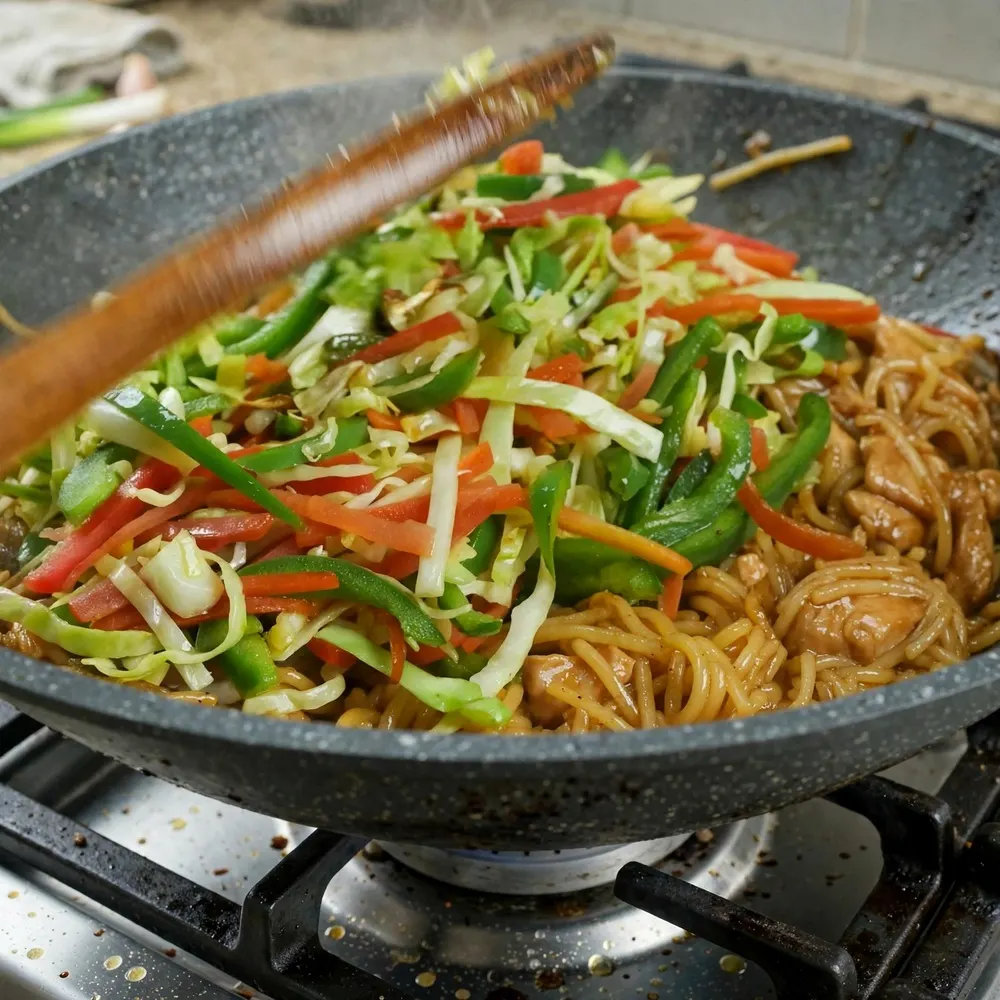
Pour in the chowmein sauce and toss for a minute, then add the stir-fried vegetables and toss for one more minute.
Why it matters: Lift and turn with tongs rather than stirring, which keeps the spaghetti from breaking into short pieces.
9. Finish and serve
Scatter the green onion leaves over the top, toss for a final minute, and dish out right away.
Recipe Card
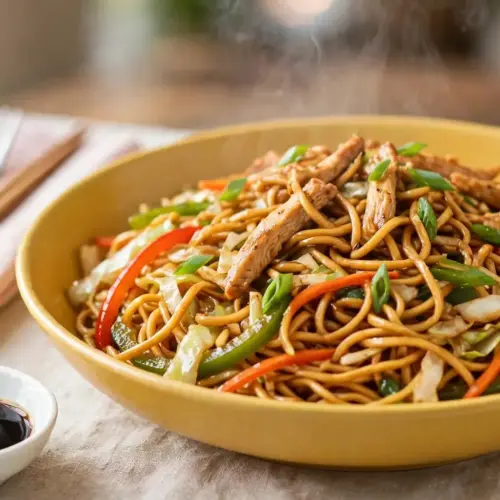
Chicken Spaghetti Recipe (Chowmein-Style)
Ingredients
For the spaghetti
- 300 g about 10.5 oz spaghetti
- Salt to taste for the boiling water
For the chicken marinade
- 300 g about 10.5 oz boneless chicken, cut into strips
- 1 tbsp soy sauce
- ½ tbsp vinegar
- 1 tsp white pepper powder
- 1 tsp garlic powder
- Salt to taste
- ¼ tsp baking soda
- 1 tbsp cooking oil for cooking the chicken
For the chowmein sauce
- 2 tbsp soy sauce
- 3 tbsp chili sauce
- 1 tbsp chili garlic sauce
- 2 tbsp oyster sauce
- 1 tbsp sesame oil
- 1 tbsp sugar
- 1 tsp salt or to taste
- 1 tsp black pepper powder
For the vegetables
- 1 –2 tbsp cooking oil
- 1 cup carrots thinly chopped
- 1 cup bell pepper capsicum, sliced
- 1½ cups cabbage shredded
For the stir-fry
- 2 –3 tbsp cooking oil
- 6 –8 garlic cloves sliced
- 2 tbsp sliced spring onions
- 1 tbsp green onion leaves for finishing
Instructions
- Mix the soy sauce, vinegar, white pepper, garlic powder, and salt in a bowl. Add the chicken and mix well, then add the baking soda and mix again. Rest for 15 minutes.
- Meanwhile, boil the spaghetti in salted water until al dente. Drain.
- Heat 1 tbsp oil in a wok, add the marinated chicken, and cook for 4–5 minutes until done. Remove from the pan.
- In a small bowl, mix all the chowmein sauce ingredients until well combined.
- Heat 1–2 tbsp oil, add the carrots, bell pepper, and cabbage, and sauté for 2 minutes. Set aside.
- Heat 2–3 tbsp oil, add the sliced garlic, and cook for 1 minute. Add the spring onions and sauté for 1 minute.
- Add the boiled spaghetti and toss. Add the cooked chicken and mix lightly.
- Pour in the chowmein sauce and cook for 1 minute. Add the stir-fried vegetables and toss for 1 minute.
- Add the green onion leaves, cook for 1 more minute, and serve hot.
Notes
- Start the marinade before you boil the water to save time.
- Keep the baking soda to exactly ¼ tsp; more can taste soapy.
- Taste before adding the final salt, since soy, oyster, and chili sauces are already salty.
Tips for the Best Results
A few small habits turn a good chicken spaghetti recipe into one your family asks for every week.
Ingredient Tips
- Cut the chicken into strips no thicker than your little finger so they cook before drying out.
- Shred the cabbage thinly; thick chunks stay raw while the carrots overcook.
- Use toasted sesame oil, the amber-colored kind, for the strongest aroma.
Mixing Tips
- Measure all the sauce ingredients into one bowl before you light the stove.
- Toss the spaghetti in the garlic oil before the sauce so the strands don’t clump.
- Use tongs to lift and drop the noodles instead of stirring in circles.
Cooking Tips
- Get the wok properly hot before the chicken goes in; you should hear a loud sizzle.
- Pull the spaghetti 1 minute before the package time, since it finishes cooking in the sauce.
- Add the vegetables back at the very end so they keep their crunch and color.
Troubleshooting Guide
Why is my chicken spaghetti sticky and clumped together?
The pasta was likely overcooked or left sitting too long after draining. Cook it just al dente, and toss it with a little oil if it has to wait before going into the wok.
Why is my stir-fried chicken tough and dry?
The strips were either too thick or cooked too long. Slice them thin, cook only 4–5 minutes, and don’t skip the baking soda in the marinade.
Why does my chowmein spaghetti taste too salty?
Soy sauce, oyster sauce, and chili sauces all carry salt, so adding the full teaspoon of salt on top can tip it over. Taste the mixed sauce first and add salt only if it needs it.
Why are my vegetables soggy?
The pan wasn’t hot enough or the vegetables were crowded, so they steamed. Cook them on high heat in a single quick batch and add them back only at the end.
Why does my chicken taste soapy?
Too much baking soda was used. Stick to exactly ¼ teaspoon for 300g of chicken.
Flavor Variations
Once you’ve made this chicken spaghetti recipe the classic way, try mixing things up.
Extra Spicy
Double the chili garlic sauce and add a few sliced green chilies with the garlic.
Egg Chowmein
Scramble two eggs in the wok before the garlic and toss them through with the chicken.
Honey Garlic
Swap the sugar for honey and add an extra clove of garlic for a sweeter, stickier glaze.
Shrimp and Chicken
Add a handful of peeled shrimp alongside the chicken for a surf-and-turf version.
Loaded Veggie
Add sliced mushrooms, snow peas, or broccoli florets to the vegetable stir-fry.
Serving Options
This chicken spaghetti recipe is a full meal on its own, but these pairings make it feel like a feast.
With Hot and Sour Soup
A small bowl of hot and sour soup on the side turns dinner into a takeout-style spread at home.
With Chicken Manchurian
Serve it alongside a saucy chicken Manchurian for a true Pakistani-Chinese dinner table.
With Fresh Cucumber Salad
A crisp, vinegary cucumber salad cuts through the rich, savory sauce.
With Crispy Spring Rolls
Golden spring rolls add crunch and make it party-ready for a crowd.
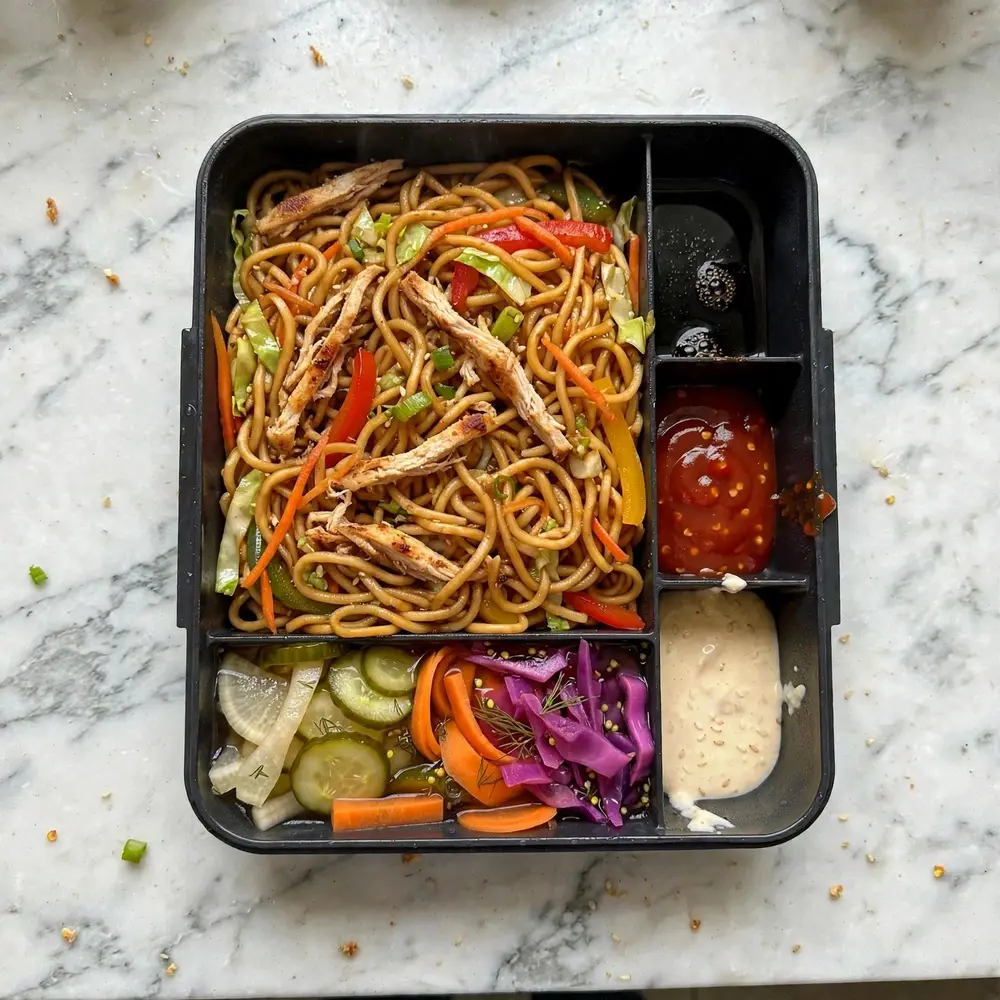
As a Lunchbox Meal
Pack it warm in an insulated container; it tastes just as good a few hours later.
Storage and Freezing
Room Temperature Storage
Don’t leave this chicken spaghetti recipe out for more than 2 hours. Move leftovers into an airtight container and refrigerate, where they keep for 3–4 days.
Freezing
Freeze cooled portions in freezer-safe containers or zip-top bags for up to 2 months. The cabbage softens slightly after freezing, but the flavor holds up well.
Thawing
Thaw overnight in the fridge, then reheat in a hot wok or skillet with a splash of water to loosen the noodles. A microwave works too; cover the dish and stir halfway through.
Frequently Asked Questions
Is this chicken spaghetti recipe the same as the cheesy baked casserole?
No. Many American versions are creamy, cheesy casseroles baked in the oven, while this is a stir-fried, chowmein-style dish with a soy and chili sauce. It’s quicker, lighter on dairy, and cooked entirely on the stovetop.
Can I make chicken spaghetti ahead of time?
Yes. Marinate the chicken, mix the sauce, and chop the vegetables up to a day ahead and keep them refrigerated. Then the final stir-fry takes about 15 minutes.
What is the best chicken for chowmein spaghetti?
Boneless chicken breast or thigh both work well. Breast gives clean, lean strips, while thigh stays juicier and is more forgiving if cooked a little longer.
Why do you add baking soda to chicken?
Baking soda raises the pH on the surface of the meat, which keeps it soft and juicy during high-heat cooking. It’s the same trick many Chinese restaurants use for silky chicken.
Can I make this chicken spaghetti recipe less spicy?
Absolutely. Cut the chili sauce and chili garlic sauce in half and replace the difference with a little extra soy sauce and a pinch more sugar.
What can I use instead of oyster sauce?
Hoisin sauce is the easiest swap and gives a sweeter, darker finish. For a closer match, look for a mushroom-based vegetarian oyster sauce.
How do I keep spaghetti from sticking in a stir-fry?
Drain it well, don’t rinse it, and toss it in the garlic oil before adding the sauce. Lifting the strands with tongs instead of stirring also keeps them separate.
Related Recipes
If this chicken spaghetti recipe became a quick family favourite, you’ll love these too: