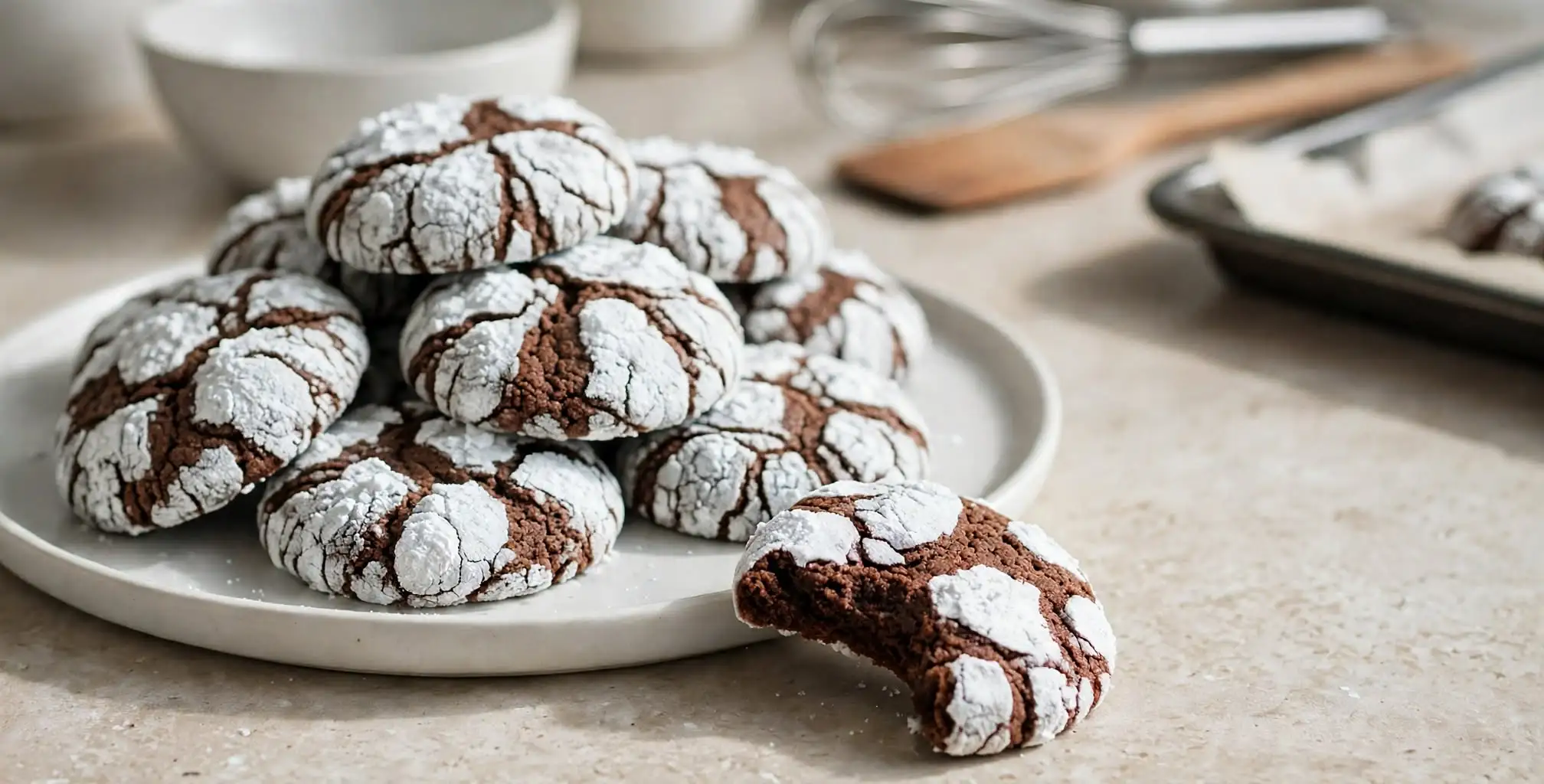
Chocolate Crinkle Cookies (Fudgy, Easy Christmas Recipe)
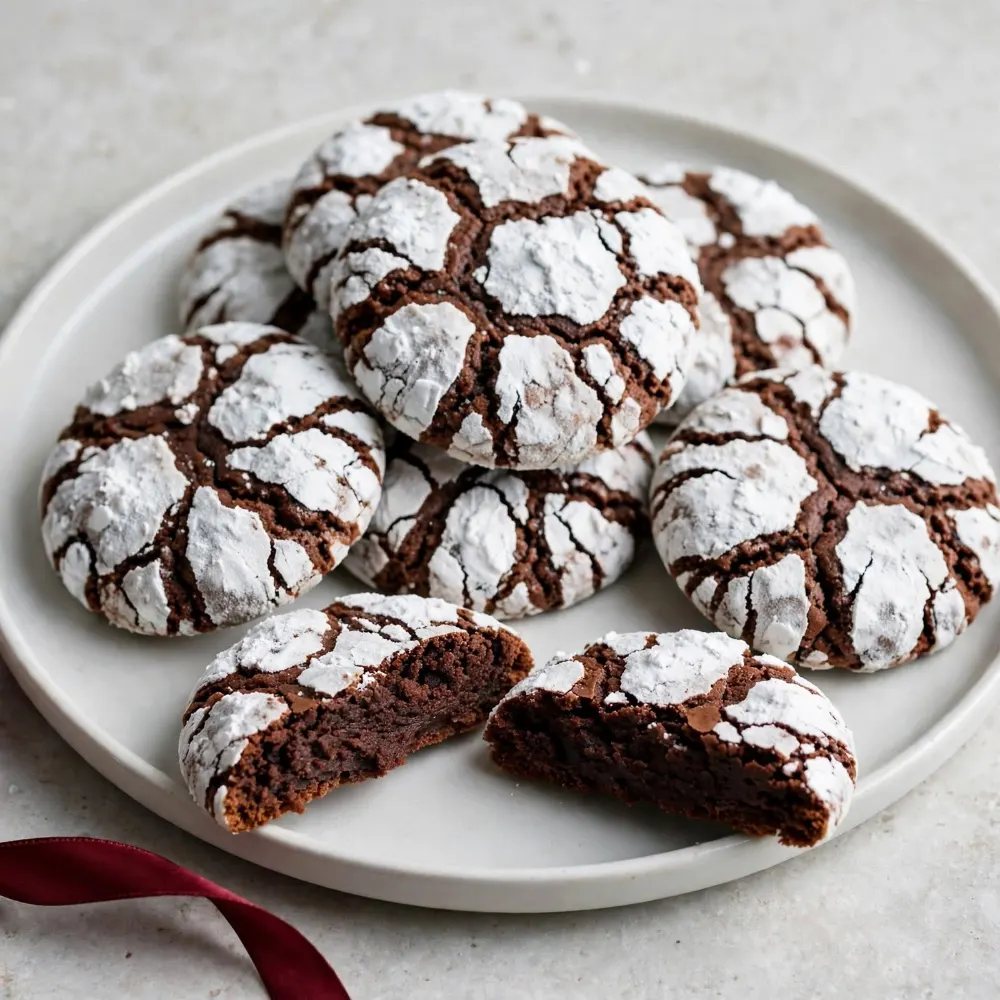
Half the presents are wrapped, a strip of tape is stuck to your sleeve, and the holiday playlist is back on the song you’ve already skipped twice. You don’t want dinner. You want something small, sweet and chocolatey that you can eat standing by the coffee maker. Chocolate crinkle cookies are made for exactly that moment. Each one is soft and almost brownie-like in the middle, wrapped in a snowy coat of powdered sugar that cracks open in the oven like frost on a car window. While they bake, the kitchen smells of cocoa and vanilla. The edges set just enough to hold together, and the first bite tastes like pure fudge. Even better, the dough comes together in one bowl from pantry staples and waits in the fridge until you’re ready to bake. Here’s how to get those bold, dramatic crinkles every time.
Why This Recipe Works
- The centers stay fudgy for days, because oil stays liquid at room temperature, so the cookies don’t firm up the way butter-based ones do.
- The crinkles are bolder and whiter thanks to a double sugar roll: the granulated sugar layer soaks up surface moisture so the powdered sugar stays bright.
- The dough holds its shape because chilling firms the cocoa dough to a fudge-like texture, so it scoops cleanly and doesn’t spread.
- You get deep chocolate flavor without melting any chocolate, since a full cup of cocoa does all the work in just one bowl.
- The cookies puff up quickly in the oven, and baking powder is what stretches the sugar coating into those classic cracks.
- They come out soft, not crisp, because you pull them while the centers still look slightly underdone and they finish setting on the hot pan.
Ingredient Notes
- Unsweetened cocoa powder: The whole flavor base. Natural or Dutch-process both work; Dutch-process gives a darker color and a smoother taste. It’s the same cocoa I use in my Chocolate Cake with Glossy Fudge Frosting, so one tin covers both.
- Granulated sugar: Sweetens the dough and gives the cookies their chew. Don’t cut it back, because it’s part of what holds the cookie together.
- Vegetable oil: Keeps the centers soft and fudgy. Canola or any other neutral oil works.
- Eggs: Bind the dough and help it rise. Room-temperature eggs blend more smoothly into the cocoa mixture.
- Vanilla extract: Rounds out the cocoa’s bitterness. Pure vanilla tastes noticeably better here.
- All-purpose flour: Gives the cookies structure. Spoon it into the cup and level it off, because packed flour makes dry cookies.
- Baking powder: Gives lift, and lift is what makes the cracks. Use a tin opened within the last 6 months.
- Salt: Sharpens the chocolate flavor so the cookies don’t taste flat.
- Granulated sugar (for rolling): The first coat. It seals the surface so the second coat stays white.
- Powdered sugar (for rolling): The snowy finish. Sift it if it’s lumpy so the coating goes on evenly.
Substitutions Table
| Ingredient | Substitute | Effect on Result |
|---|---|---|
| Vegetable oil | Melted unsalted butter (same amount) | Richer, buttery flavor; the cookies firm up a little more after a day |
| Natural cocoa powder | Dutch-process cocoa | Darker color, smoother and less tangy flavor |
| All-purpose flour | 1:1 gluten-free baking flour | Works well; slightly more delicate texture |
| Large eggs | No good egg-free swap | Flax eggs make the cookies too flat and gummy |
| Vanilla extract | ½ tsp almond extract | A nutty, bakery-style flavor |
| Granulated sugar (in dough) | Light brown sugar (up to half) | Chewier center with a mild caramel note |
Equipment Needed
- Large mixing bowl and whisk
- Silicone spatula
- Plastic wrap or a lid for chilling
- 1-tablespoon cookie scoop (equal sizes bake evenly)
- 2 baking sheets lined with parchment paper (light-colored pans stop the bottoms from scorching)
- 2 small shallow bowls for the sugars
- Wire cooling rack
Step-by-Step Directions
1. Whisk the cocoa base
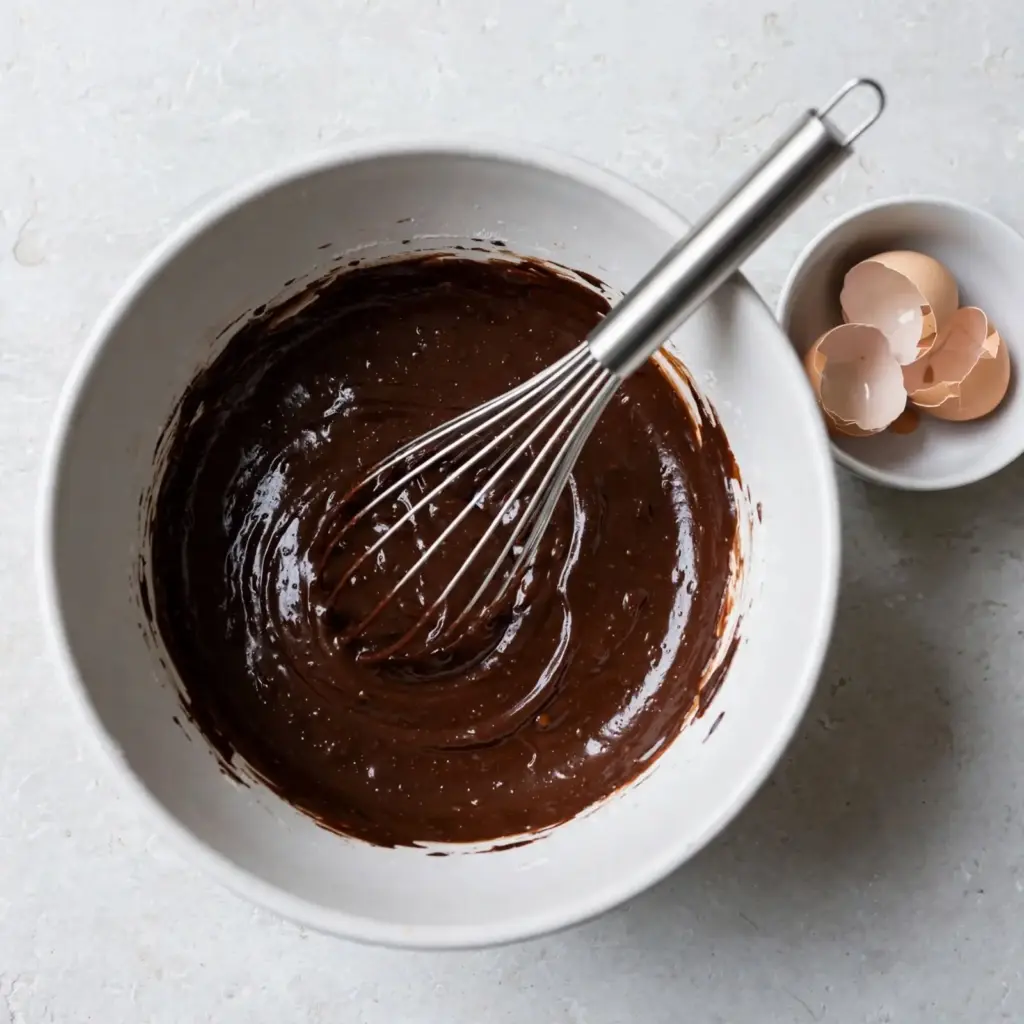
Whisk the cocoa powder, granulated sugar and oil in a large bowl until you have a thick, glossy paste.
Why: Mixing the cocoa with the oil first breaks up lumps and deepens the chocolate flavor.
2. Beat in the eggs and vanilla
Add the eggs one at a time, whisking well after each, then stir in the vanilla.
How to know: The mixture should look smooth and shiny, like thick brownie batter, with no streaks of egg.
3. Fold in the dry ingredients
In a separate bowl, whisk the flour, baking powder and salt, then fold them into the chocolate mixture with a spatula.
Why: Stop as soon as the last streak of flour disappears. Overmixing makes the cookies tough.
4. Chill the dough
Cover the bowl and refrigerate for at least 4 hours, or overnight.
How to know: The dough will be very soft before chilling, which is normal. It’s ready when it feels firm, like cold fudge.
5. Preheat and set up
Heat the oven to 350°F (175°C), line the baking sheets with parchment, and pour the granulated and powdered sugar into two separate shallow bowls.
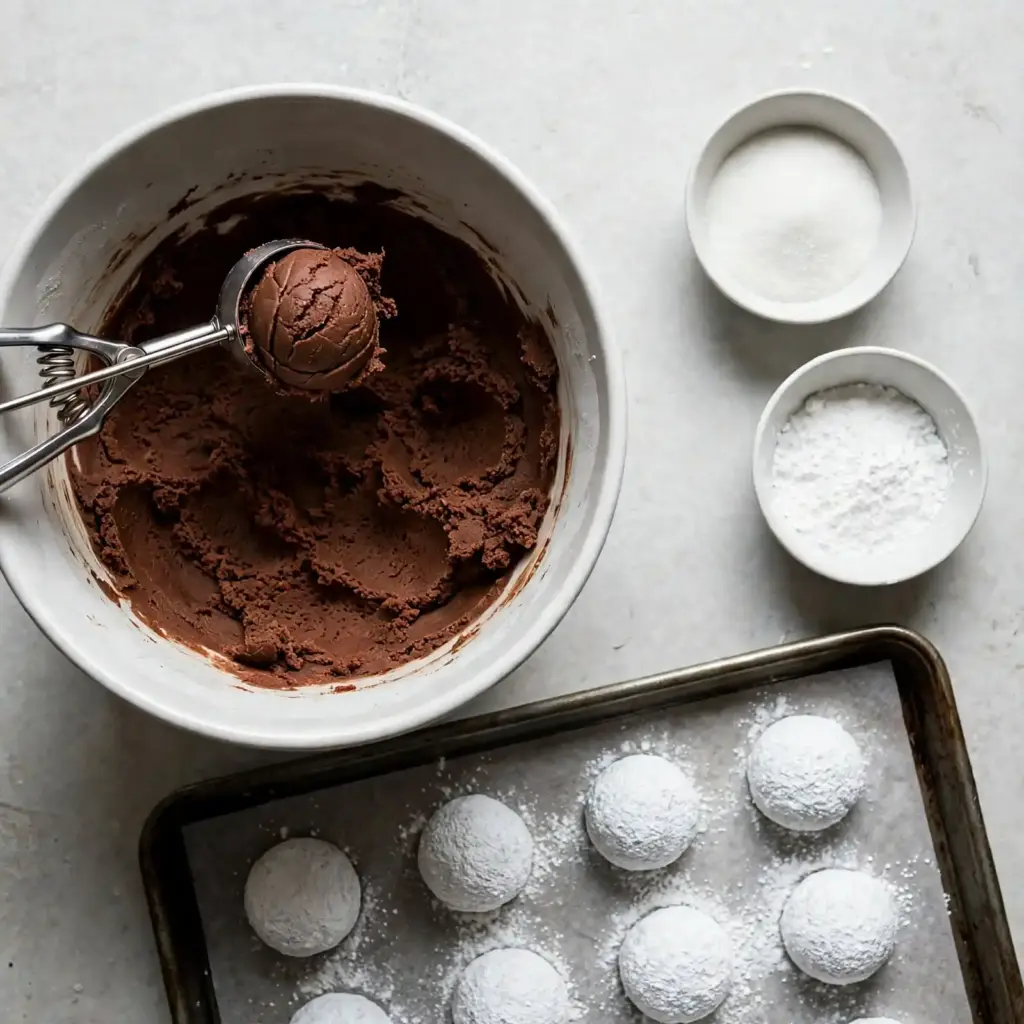
6. Scoop and double-roll
Scoop 1-tablespoon portions, roll them into balls, roll each in granulated sugar, then coat it thickly in powdered sugar.
How to know: You shouldn’t see any brown dough through the white. A thin coat melts away in the oven.
7. Bake
Place the balls 2 inches apart and bake for 10 to 12 minutes, one tray at a time.
How to know: They’re done when the edges are set and the cracks have spread, even though the centers still look slightly underbaked.
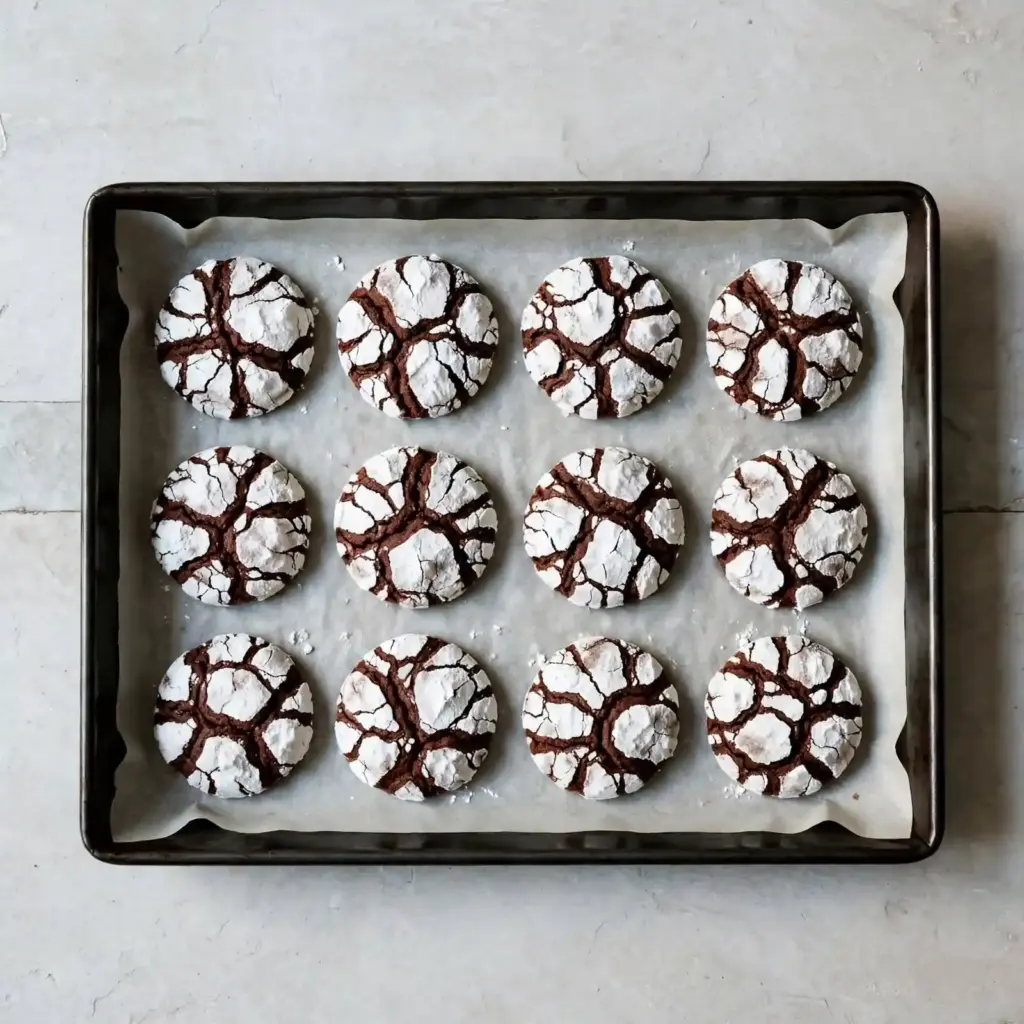
8. Cool
Let the cookies rest on the pan for 5 minutes, then move them to a wire rack to cool completely.
Why: They’re too soft to lift straight out of the oven and will break if you move them too soon.
Recipe Card
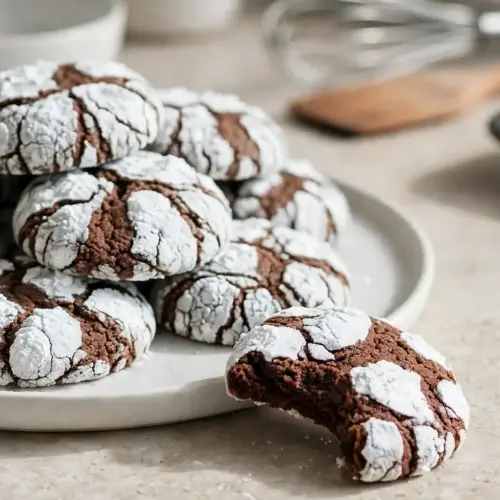
Chocolate Crinkle Cookies
Ingredients
For the dough
- 1 cup 85 g unsweetened cocoa powder
- 2 cups 400 g granulated sugar
- ½ cup 120 ml vegetable oil
- 4 large eggs room temperature
- 2 teaspoons pure vanilla extract
- 2 cups 250 g all-purpose flour
- 2 teaspoons baking powder
- ½ teaspoon salt
For Rolling
- ½ cup 100 g granulated sugar
- 1 cup 120 g powdered sugar
Instructions
- In a large bowl, whisk the cocoa powder, 2 cups granulated sugar and oil until glossy.
- Whisk in the eggs one at a time, then stir in the vanilla.
- In a separate bowl, whisk the flour, baking powder and salt. Fold into the chocolate mixture just until no flour streaks remain.
- Cover and refrigerate for at least 4 hours or overnight, until firm.
- Preheat the oven to 350°F (175°C) and line 2 baking sheets with parchment paper.
- Scoop 1-tablespoon portions and roll into balls. Roll each in granulated sugar, then coat thickly in powdered sugar.
- Place 2 inches apart and bake one tray at a time for 10–12 minutes, until the edges are set and the tops are crackled.
- Cool on the pan for 5 minutes, then transfer to a wire rack to cool completely.
Notes
- Keep the dough you aren’t using in the fridge while each tray bakes.
- For extra-fudgy centers, bake for 10 minutes.
- Unbaked dough balls (uncoated) freeze well for up to 3 months.
- Nutrition is per cookie and includes an estimate for the sugar coating.
Nutrition Facts (per cookie): Calories: 85 kcal | Carbohydrates: 14 g | Protein: 1 g | Fat: 3 g | Saturated Fat: 0.5 g | Cholesterol: 15 mg | Sodium: 50 mg | Fiber: 1 g | Sugar: 10 g
Tips for the Best Results
Ingredient Tips
- Weigh the flour at 250 g if you have a scale. It’s the single biggest fix for dry cookies.
- Test your baking powder by dropping a pinch into hot water. If it doesn’t fizz, replace it.
- Sift lumpy cocoa before measuring so you don’t end up with bitter pockets in the dough.
Mixing Tips
- Use a spatula, not a mixer, for the flour stage. It’s much harder to overmix that way.
- If the dough is still sticky after chilling, give it 30 more minutes in the fridge instead of adding flour.
- Dust your palms with powdered sugar before rolling so the dough doesn’t stick to your hands.
Baking Tips
- Bake one tray at a time on the center rack so the cracks form evenly.
- Let the baking sheets cool fully between batches. It’s the same cool-pan rule I swear by for my soft cut-out sugar cookies, because a warm pan melts the coating before the cookies start to rise.
- Take them out when the centers look a little wet. Two extra minutes turns fudgy into cakey.
Troubleshooting Guide
Why didn’t my chocolate crinkle cookies crinkle?
Usually the coating was too thin, the dough was too warm, or the baking powder was old. Chill the dough fully, use fresh baking powder, and pile on the powdered sugar.
Why did the powdered sugar melt into my cookies?
The sugar absorbed moisture from the dough before it could set. The granulated sugar roll underneath acts as a barrier, so don’t skip it.
Why are my crinkle cookies flat?
The dough was either under-chilled or went onto a warm pan. Chill until firm and always start each batch on a cool sheet.
Why are my chocolate crinkle cookies dry and cakey?
Too much flour or a minute too long in the oven is almost always the cause. Spoon and level (or weigh) the flour and pull the cookies while the centers still look soft.
Why is my cookie dough too sticky to roll?
Oil-based cocoa dough needs a full chill to firm up. Give it at least 4 hours, and scoop it straight from the fridge.
Flavor Variations
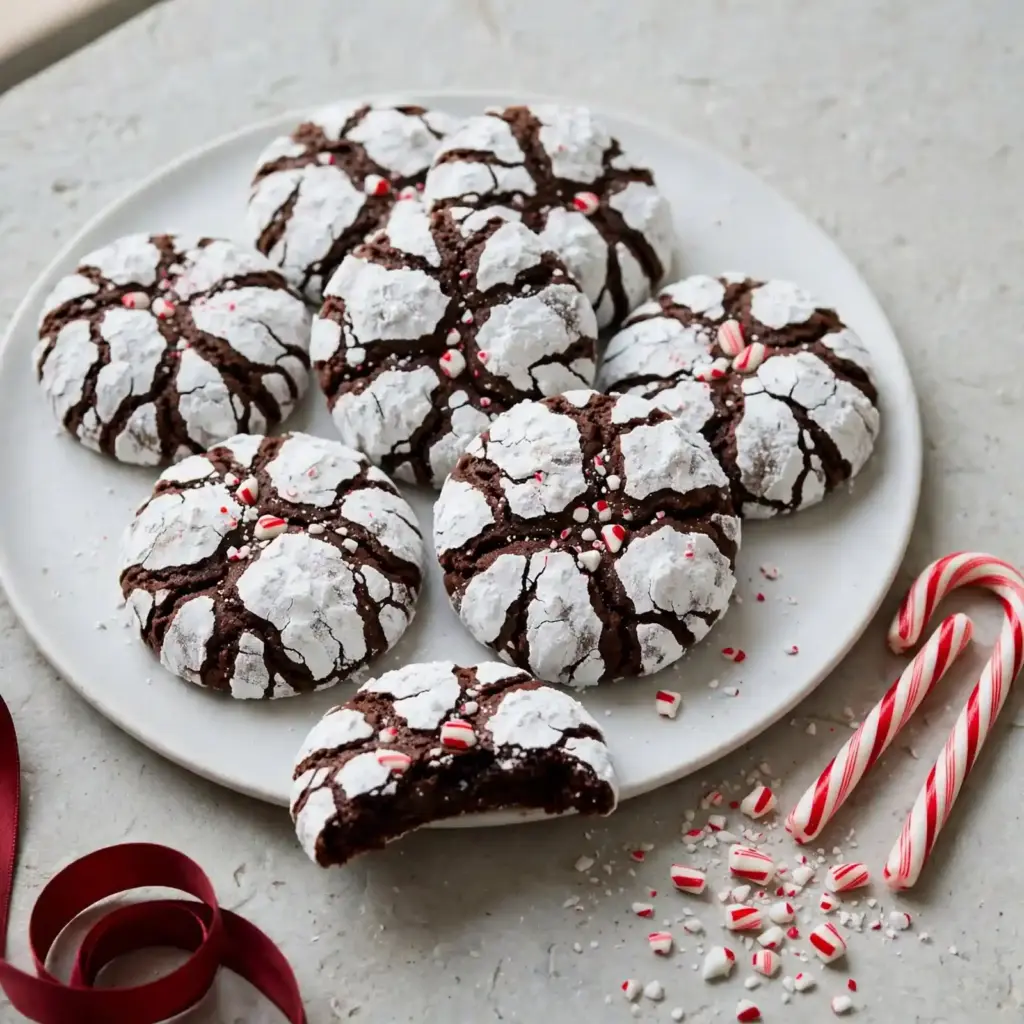
Peppermint Crinkles
Swap half the vanilla for ½ teaspoon peppermint extract and fold in ¼ cup crushed candy canes for a cool, festive bite.
Mocha Crinkles
Whisk 2 teaspoons instant espresso powder into the cocoa base to deepen the chocolate and add a coffee-shop warmth.
Orange Chocolate Crinkles
Add the zest of one orange with the eggs for a bright, citrusy twist that tastes like a chocolate orange.
Mexican Hot Chocolate Crinkles
Stir 1 teaspoon cinnamon and a small pinch of cayenne into the flour for a gentle, cozy heat.
Chocolate Chip Crinkles
Fold ½ cup mini chocolate chips into the dough for melty pockets in every bite.
Serving Options
Christmas Cookie Tray
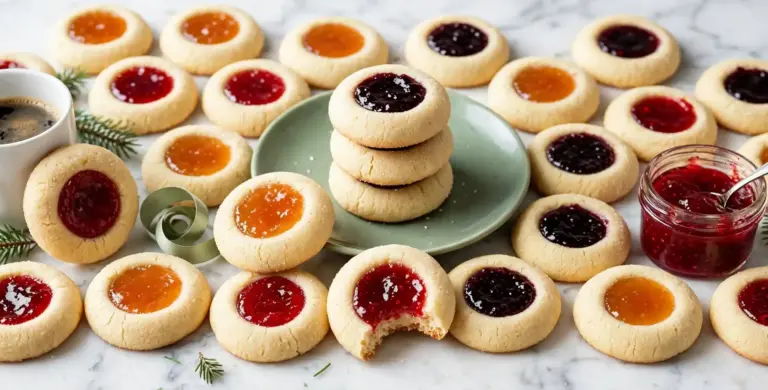
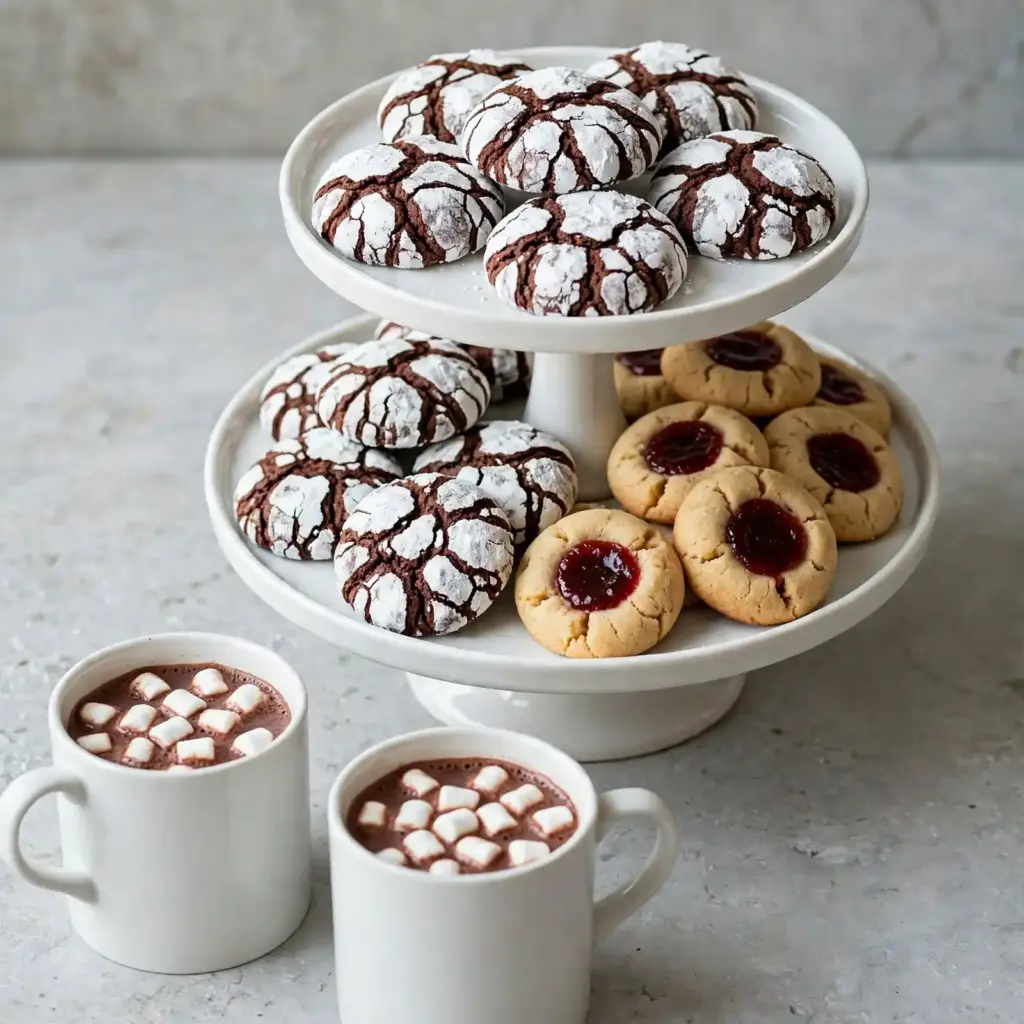
Arrange them next to my jam-filled buttery Thumbprint Cookies so the white crinkles and ruby-red centers set each other off on the platter.
Hot Cocoa Pairing
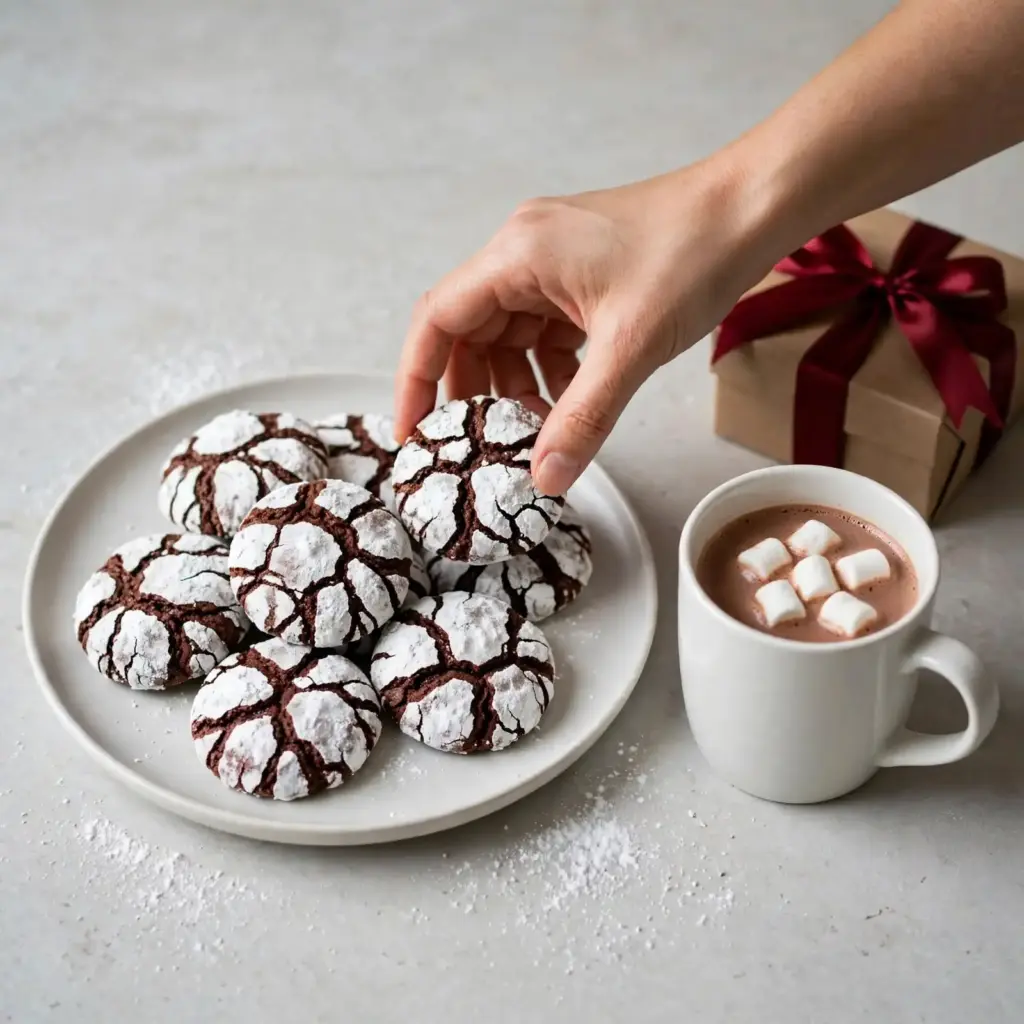
Serve a stack beside steaming mugs of hot chocolate for an easy snow-day treat.
Ice Cream Sandwiches
Press a scoop of vanilla or peppermint ice cream between two cookies, then freeze until firm.
Cookie Exchange Gift Boxes
Layer them in parchment-lined boxes tied with red ribbon, which makes a homemade gift that travels well.
Afternoon Coffee Plate
Pair two or three with a hot latte or a cold glass of milk when you need a sweet little break.
Storage and Freezing
Room Temperature Storage
Keep the cookies in an airtight container at room temperature for up to 5 days. Over time the powdered sugar soaks in a little, so give them a quick dusting before serving to bring back that snowy look.
Freezing
For the best results, freeze the dough: scoop it into balls, freeze them on a tray, then bag them uncoated for up to 3 months. Baked cookies also freeze well in an airtight container for up to 2 months.
Thawing
Roll frozen dough balls in both sugars and bake straight from the freezer, adding 1 to 2 minutes. Thaw baked cookies in their container on the counter for about an hour so condensation doesn’t form on the sugar.
Frequently Asked Questions
Do you have to chill chocolate crinkle cookie dough?
Yes. This dough is very soft at first, and chilling is what makes it firm enough to roll. Without it, the cookies spread flat and the crinkles never form. Four hours is the minimum, and overnight is even better.
Can I use butter instead of oil in crinkle cookies?
You can swap in the same amount of melted butter for a richer flavor. The cookies will be slightly firmer the next day, while the oil version stays soft and fudgy longer.
Why do you roll crinkle cookies in granulated sugar first?
The granulated sugar creates a dry barrier between the moist dough and the powdered sugar. That keeps the top coat bright white instead of letting it melt into a grey, patchy finish.
What’s the difference between crinkle cookies and brownies?
They taste similar, but crinkles have more flour and baking powder, so they hold a round cookie shape with a lighter crumb. If you want something even denser and gooier, my chewy Fudgy Brownies are the pan-baked cousin.
Can I make chocolate crinkle cookies ahead for Christmas?
Absolutely. Make the dough up to 2 days ahead and keep it in the fridge, or freeze dough balls for up to 3 months. Baking fresh right before a party gives you the whitest, most dramatic cracks.
Should I use natural or Dutch-process cocoa?
Either one works because the recipe uses baking powder, which doesn’t depend on the cocoa’s acidity. Dutch-process gives darker, smoother cookies, and natural cocoa tastes a bit fruitier.
How many cookies does this recipe make?
It makes about 48 cookies using a 1-tablespoon scoop. For bigger bakery-style cookies, use 2 tablespoons per ball and bake for 13 to 14 minutes.
Related Recipes
If this tray of crinkles has you in a holiday baking mood, here are two more cookies that belong right beside them:
- Chocolate Chip Cookies
- Gingerbread Cookies Kids Love to Decorate