
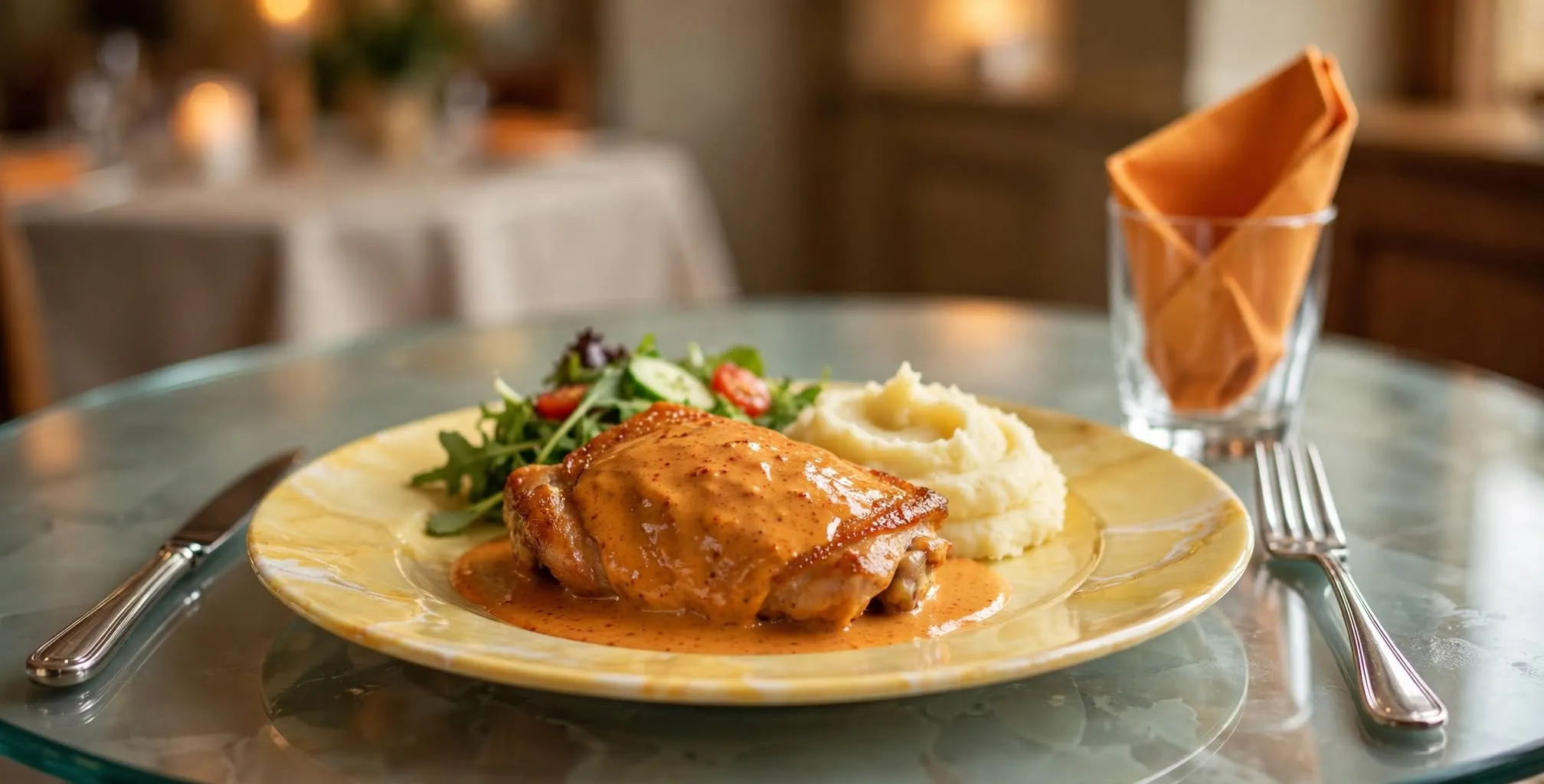
Easy Creamy Paprika Chicken Thighs with Mashed Potatoes
There are days when a salad just won’t cut it, when what you actually want is something rich, savory, and undeniably meaty, the kind of meal that makes you feel properly fed. That’s exactly the itch these chicken thighs scratch: seared until golden, then simmered in a smoky paprika cream sauce until every bite tastes like it took far more effort than it actually did. What makes this version different is the mustard, a sharp, tangy kick that cuts through the cream so the sauce never feels heavy or one-note. I’ve leaned on this recipe on the nights when only meat and something rich would do, and it’s never once let me down.
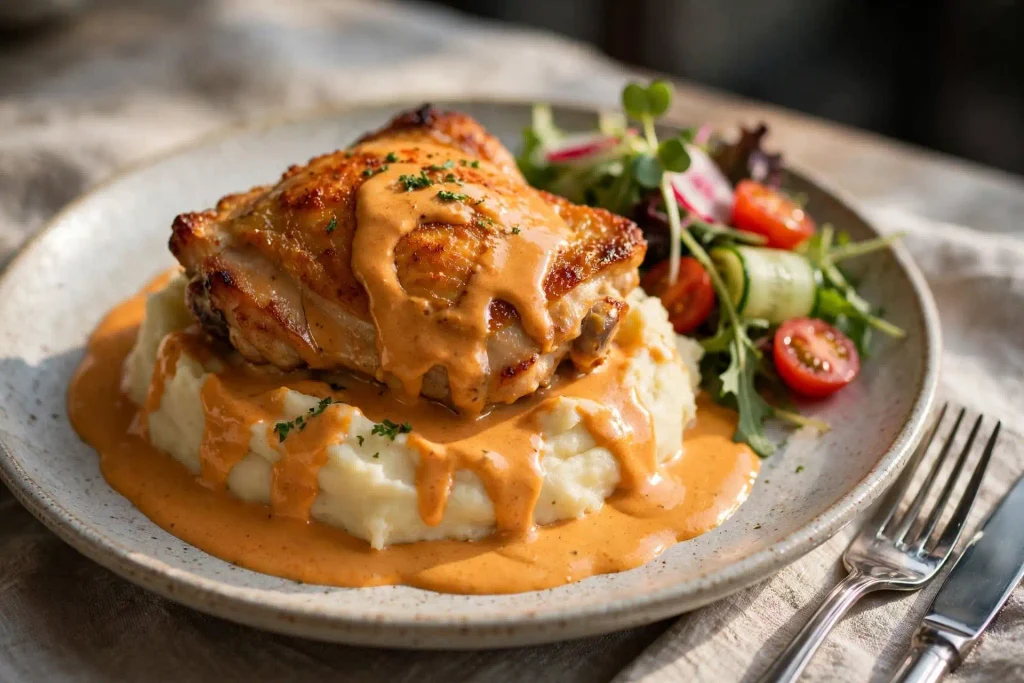
Picture chicken thighs with a deep golden crust, sauce clinging to every piece, smelling like smoked paprika and butter the second it hits the pan. It’s the kind of dinner for when you’re genuinely craving meat, hosting someone you want to impress without the stress, or just done pretending a bowl of greens will satisfy you tonight. Here’s exactly how to make it.
Why This Recipe Works
- One pan does double duty — the chicken thighs are seared and then finished in the same pan as the sauce, so all those browned bits (fond) become flavor instead of getting scrubbed away.
- Bone-in flavor, boneless ease — this recipe is written for versatility, so the seasoning blend works whether your chicken thighs are skin-on or skinless.
- The sauce is built to cling — a mix of cream, stock, and mustard reduces just enough to coat the chicken thighs rather than run off the plate.
- Smoked and sweet paprika together — using both types adds depth that a single paprika alone can’t deliver.
- Balanced acidity — the Dijon mustard cuts through the richness of the cream, so the dish never feels heavy or one-note.
- Mashed potatoes built in — this isn’t just a chicken thigh recipe, it’s a full plate, with a starchy side designed to soak up every drop of sauce.
Ingredient Notes
- Chicken thighs — the star of the dish; their higher fat content keeps them juicy through searing and simmering, so they’re far more forgiving than chicken breast.
- Garlic powder — adds a background savoriness to the dry rub without the risk of burning like fresh garlic can during a hot sear.
- Black pepper — used in both the rub and the sauce, so buy whole peppercorns and grind fresh if you can for a sharper bite.
- Sweet paprika — the backbone of the rub’s color and mild flavor; look for Hungarian sweet paprika if available.
- Onion powder — rounds out the savory base of the rub alongside the garlic powder.
- Smoked paprika — this is what gives the dish its deeper, almost barbecue-like undertone; don’t substitute more sweet paprika for it, the smokiness is distinct.
- Cumin powder — a small amount adds warmth and earthiness that keeps the spice blend from tasting flat.
- Cooking oil — use a neutral, high-heat oil so it can handle searing the chicken thighs without smoking.
- Potatoes — starchy varieties like Russets mash the smoothest; waxy potatoes will hold their shape more and give a chunkier mash.
- Butter and sour cream — these two together give the mash richness and a subtle tang.
- Heavy cream or whole milk — warming it before adding keeps the potatoes from seizing up or turning gluey.
- Onion — finely chopped and cooked low and slow, this becomes the sweet base of the sauce.
- Garlic paste — dissolves quickly into the sauce; fresh minced garlic works as a direct swap.
- Tomatoes (as paste) — adds body and a gentle acidity that balances the cream.
- Chicken stock — use a good-quality stock, since it forms a big part of the sauce’s flavor base.
- Heavy cream (for sauce) — this is what turns the pan sauce silky rather than watery; avoid substituting a low-fat option, or it may split.
- Dijon mustard — the tang that ties the whole sauce together; a coarse or whole-grain mustard also works if you like more texture.
- Fresh parsley — a finishing garnish that adds color and a fresh, herby lift right before serving.
Substitutions Table
| Ingredient | Substitute | Effect on Result |
|---|---|---|
| Chicken thighs | Boneless, skinless chicken thighs | Cooks slightly faster; still juicy |
| Sour cream | Plain Greek yogurt | Slightly tangier mash |
| Heavy cream | Half-and-half | Lighter sauce, less rich |
| Dijon mustard | Whole-grain mustard | More texture, milder tang |
| Chicken stock | Vegetable stock | Slightly lighter flavor |
| Fresh tomatoes | Canned tomato paste (2 tbsp) | Faster, slightly more concentrated |
Equipment Needed
- Large skillet or sauté pan (for both searing the chicken thighs and building the sauce)
- Medium pot (for boiling potatoes)
- Potato masher or ricer (a ricer gives the smoothest mash)
- Cutting board and sharp knife
- Measuring spoons and cups

Step-by-Step Directions
1. Season the Chicken
Pat the chicken thighs dry, then rub them with garlic powder, black pepper, sweet paprika, onion powder, smoked paprika, and cumin. Mix well so the spices coat the chicken evenly. Drying the chicken first helps the seasoning stick and gives you a better sear.
2. Fry the Chicken
Heat the oil in a large pan over medium-low heat. Fry the chicken thighs on both sides for 4–5 minutes each, until golden brown and cooked through. You’ll know they’re ready when the internal temperature hits 165°F (74°C). Remove and set aside on a plate.
3. Boil the Potatoes
In a separate pot, boil the potato cubes with salt and black pepper until fork-tender, about 12–15 minutes. Don’t skip salting the water — it’s your only chance to season the potatoes from the inside.
4. Mash the Potatoes
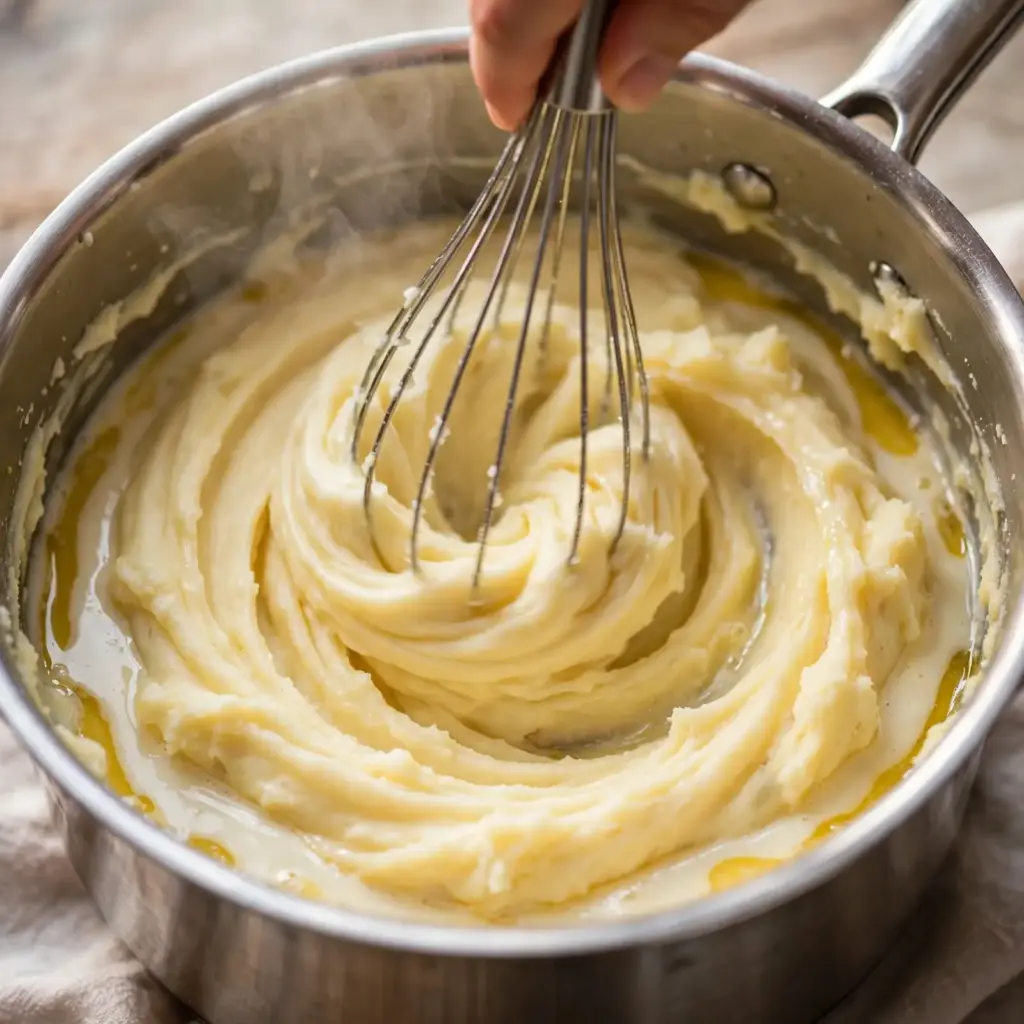
Drain the potatoes and mash with butter and sour cream. Slowly pour in the warm heavy cream or milk while mashing, until smooth and silky. Warming the dairy first keeps the mash from turning cold and stiff.
5. Sauté the Onion
In the same pan used for the chicken, add the finely chopped onion and stir over medium heat for 2–3 minutes until softened. Scrape up any browned bits from the chicken as you go — that’s where a lot of the flavor lives.
6. Add Garlic
Stir in the garlic paste and cook for 1–2 minutes until fragrant. Keep the heat moderate here so the garlic doesn’t scorch and turn bitter.
7. Build the Sauce Base
Add the tomato paste and smoked paprika, mixing well to combine with the onions and garlic.
8. Add Stock and Cream
Pour in the chicken stock, stir, then add the heavy cream and mix again until smooth.
9. Finish the Sauce
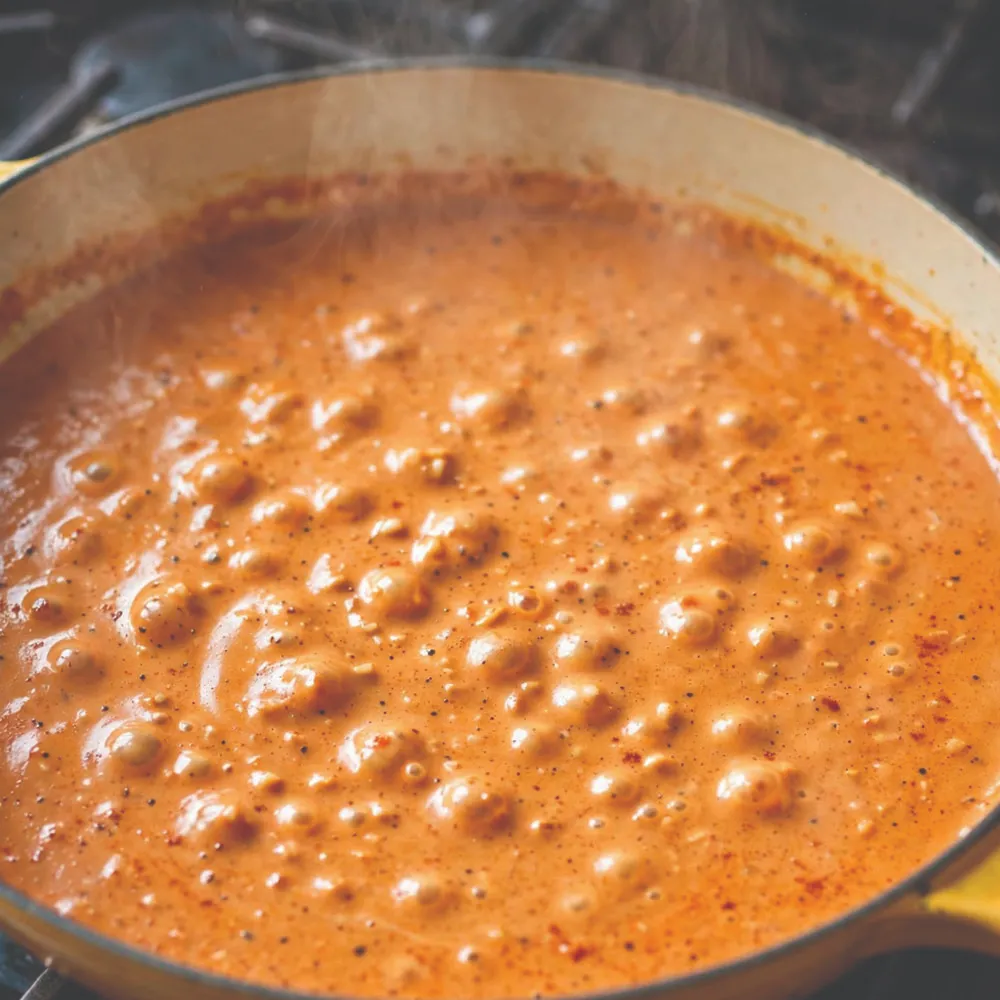
Stir in the Dijon mustard and let the sauce simmer gently until it thickens, about 5–6 minutes. Taste and adjust with salt and black pepper as needed. The sauce is ready when it coats the back of a spoon.
10. Combine and Simmer
Return the chicken thighs to the pan, spooning the sauce over each piece. Simmer for 2–3 minutes so the chicken soaks up the flavor and heats back through.
11. Garnish and Serve
Sprinkle with fresh parsley and serve the chicken thighs hot over the mashed potatoes.
Recipe Card
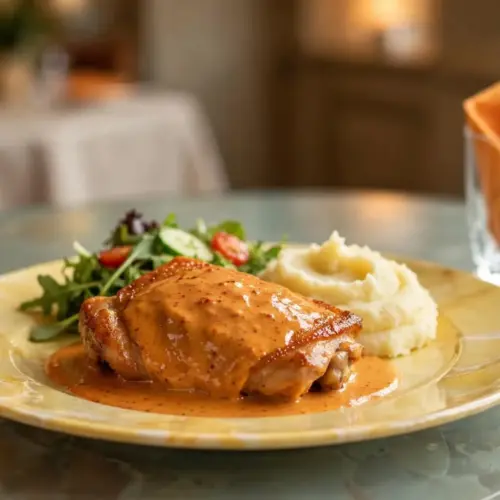
Easy Creamy Paprika Chicken Thighs with Mashed Potatoes
Ingredients
- 5 chicken thighs
- 1/2 tsp garlic powder
- 1 tsp black pepper
- 1 1/2 tsp sweet paprika
- 1/2 tsp onion powder
- 1/2 tsp smoked paprika
- 1/2 tsp cumin powder
- 2 tbsp cooking oil for frying
- 4 medium potatoes peeled and cubed
- 1 tsp salt for potatoes
- 1/2 tsp black pepper for potatoes
- 4 tbsp butter
- 1 tbsp sour cream
- 1/2 cup warm heavy cream or whole milk
- 1 small onion finely chopped
- 1/2 tsp garlic paste
- 2 tomatoes made into paste
- 1 tsp smoked paprika for sauce
- 3/4 cup chicken stock
- 3/4 cup heavy cream for sauce
- 1 1/2 tsp Dijon mustard
- Salt and black pepper to taste
- Fresh parsley chopped, for garnish
Instructions
- Season chicken thighs with the dry spice mix.
- Fry on medium-low, 4–5 minutes per side. Set aside.
- Boil potatoes with salt and pepper until tender.
- Mash potatoes with butter, sour cream, and warm cream.
- Sauté onion in the same pan.
- Add garlic paste, cook briefly.
- Add tomato paste and smoked paprika.
- Add stock and cream, mix until smooth.
- Stir in Dijon mustard, simmer until thickened.
- Return chicken to the pan, spoon sauce over, simmer.
- Garnish with parsley and serve over mashed potatoes.
Notes
Tips for the Best Results
Ingredient Tips
- Use full-fat sour cream and cream — low-fat versions can split under heat.
- Fresh garlic paste gives a rounder flavor than jarred.
Mixing Tips
- Add the warm cream to the potatoes gradually, not all at once, for the smoothest texture.
- Stir the sauce constantly once the cream goes in to prevent it from separating.
Cooking Tips
- Don’t crowd the pan when searing the chicken thighs — give them space to brown properly.
- Keep the sauce at a gentle simmer, never a hard boil, once the cream is added.
Troubleshooting Guide
Why is my sauce too thin?
This usually means it hasn’t reduced long enough. Let it simmer a few extra minutes uncovered until it thickens to coat a spoon.
Why did my cream sauce split?
High heat is the usual cause. Lower the flame and stir gently to bring it back together; adding a splash of warm cream can also help.
Why are my chicken thighs tough?
Overcooking is the most common reason. Pull the chicken thighs once they hit 165°F (74°C) internally, then let the sauce simmer finish the job gently.
Why is my mashed potato gluey?
Over-mixing releases too much starch. Mash just until smooth and stop, especially if using a food processor.
Why doesn’t my sauce taste smoky enough?
Smoked paprika loses potency over time. If your jar is old, use a little extra or replace it for a fresher, more pronounced flavor.
Flavor Variations
Spicy Chicken Thighs
Add a pinch of cayenne or chili flakes to the dry rub for heat.
Lemon Herb Chicken Thighs
Stir in a squeeze of lemon juice and fresh thyme at the end for brightness.
Sun-Dried Tomato Chicken Thighs
Swap fresh tomato paste for chopped sun-dried tomatoes for a deeper, tangier sauce.
Mushroom Cream Chicken Thighs
Sauté sliced mushrooms with the onion for an earthy twist.
Smoky Bacon Chicken Thighs
Cook a couple of strips of bacon first and use the rendered fat to fry the chicken thighs.
Serving Options
With Buttered Rice
A simple base that lets the sauce take center stage.
Alongside Roasted Vegetables
Balances the richness with something lighter and slightly charred.
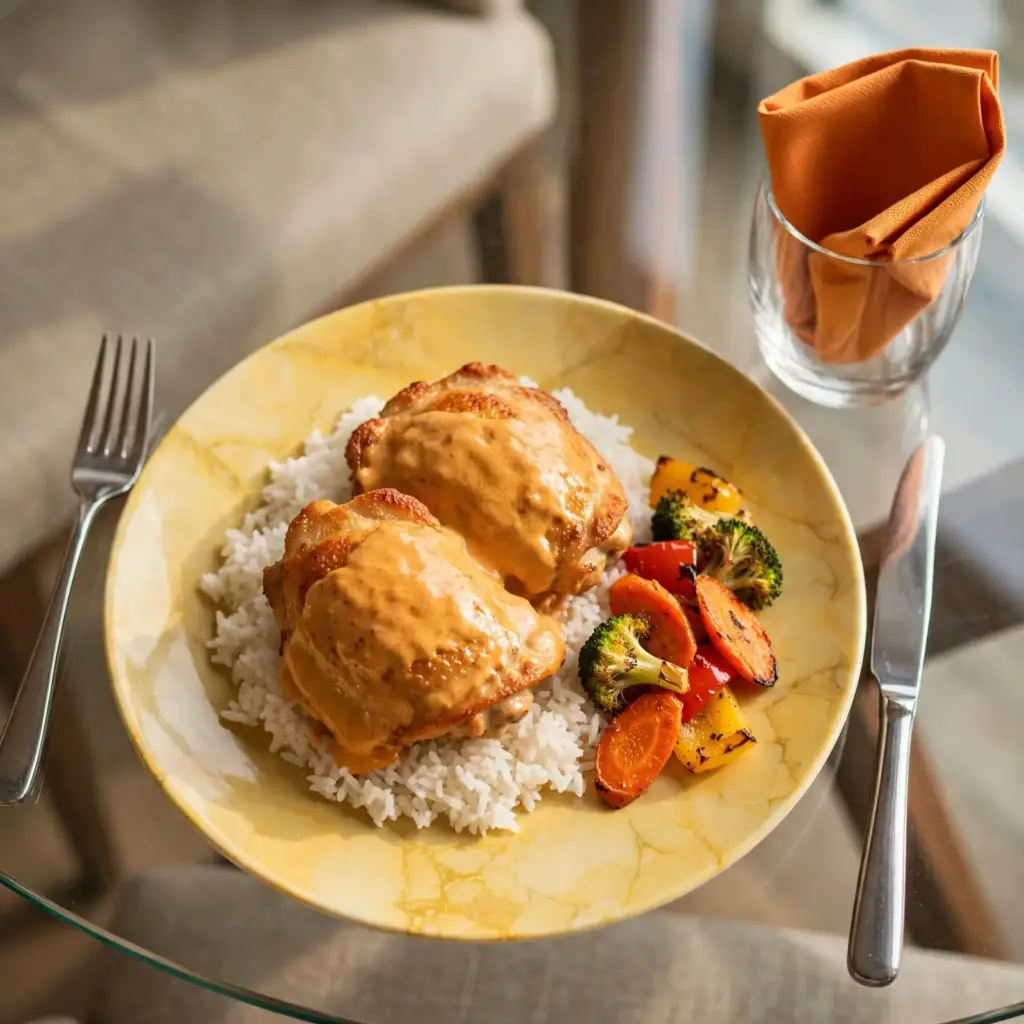
With Crusty Bread
Perfect for mopping up any leftover sauce on the plate.
Over Egg Noodles
A comforting, stick-to-your-ribs alternative to potatoes.
Storage and Freezing
Room Temperature Storage
Don’t leave the chicken thighs out for more than 2 hours; the cream sauce spoils quickly at room temperature.
Freezing
Cool completely, then freeze the chicken and sauce (without the mashed potatoes) in an airtight container for up to 2 months. Cream sauces can separate slightly when frozen, but a gentle reheat with a stir will bring it back.
Thawing
Thaw overnight in the refrigerator, then reheat gently on the stovetop over low heat, stirring often to bring the sauce back together.
Frequently Asked Questions
Can I use chicken breast instead of chicken thighs?
Yes, but chicken breast cooks faster and dries out more easily, so watch the timing closely and pull it as soon as it hits 165°F (74°C).
Can I make this recipe ahead of time?
You can make the sauce and chicken thighs a day ahead and reheat gently; the mashed potatoes are best made fresh or reheated with a splash of extra cream.
What can I use instead of heavy cream?
Half-and-half works but will give a noticeably lighter, less rich sauce.
Is this recipe gluten-free?
Yes, as written, none of the ingredients contain gluten, just double-check your chicken stock and mustard labels.
Can I make this in one pot from start to finish?
Yes, that’s how it’s designed. Using the same pan for the chicken and sauce is part of what builds the flavor.
How do I know my chicken thighs are fully cooked?
The most reliable way is a meat thermometer reading 165°F (74°C) at the thickest part.
Can I double this recipe?
Yes, though you may need to sear the chicken thighs in batches so the pan isn’t overcrowded.
What’s the best way to reheat leftovers?
Reheat gently on the stovetop over low heat with a splash of stock or cream to loosen the sauce back up.
Related Recipes
If you loved these chicken thighs, you’ll probably enjoy these too: