Easy Pumpkin Cheesecake with a Gingersnap Crust (No Cracks)
What do you put on the dessert table when the whole family has already eaten pumpkin pie three times since Halloween? By late November, the bakery case at every grocery store looks exactly the same, the kids are home on break asking for “something good,” and you want a treat that feels special without spending the whole day baking. That was my situation one chilly Saturday, standing at the counter with a can of pumpkin, a few blocks of cream cheese, and zero patience for crimping pie dough.
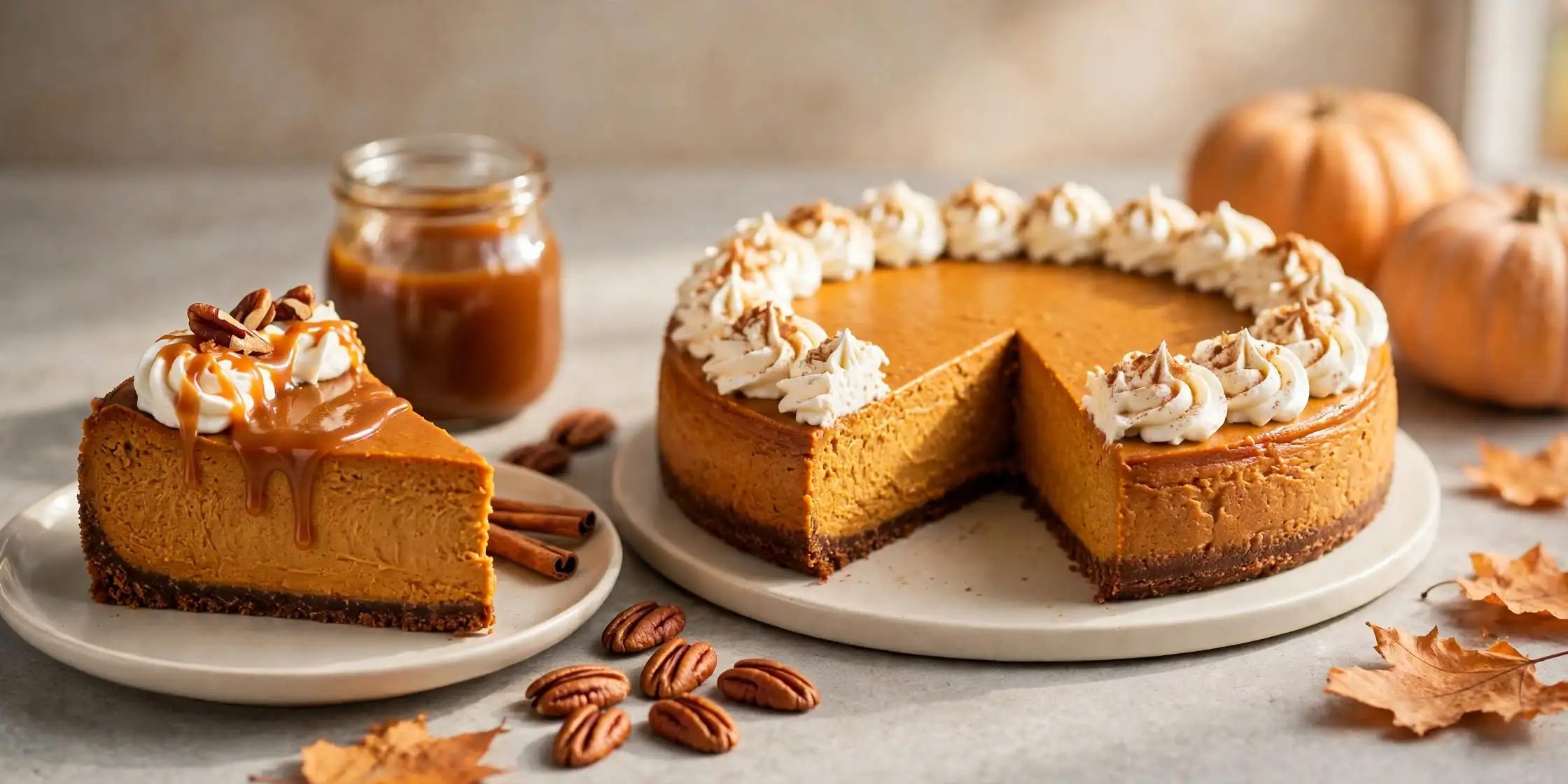
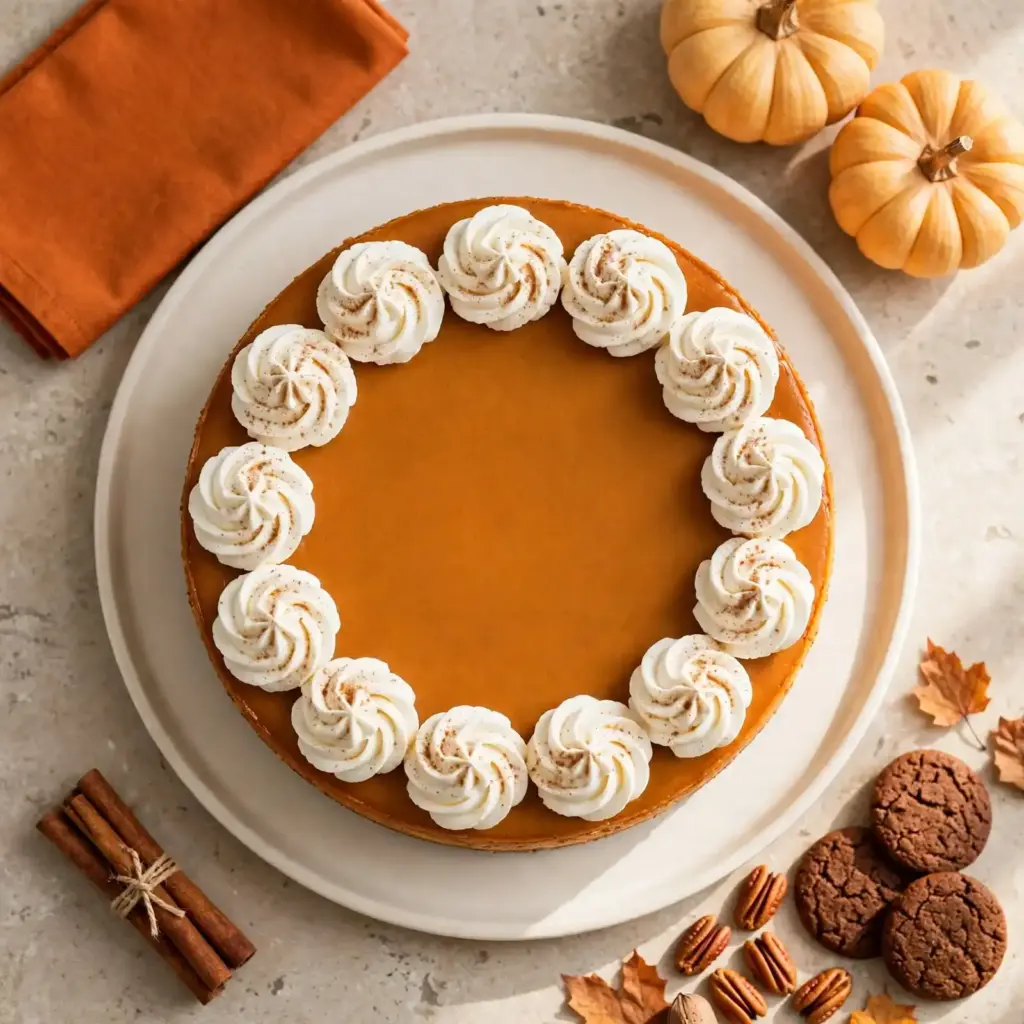
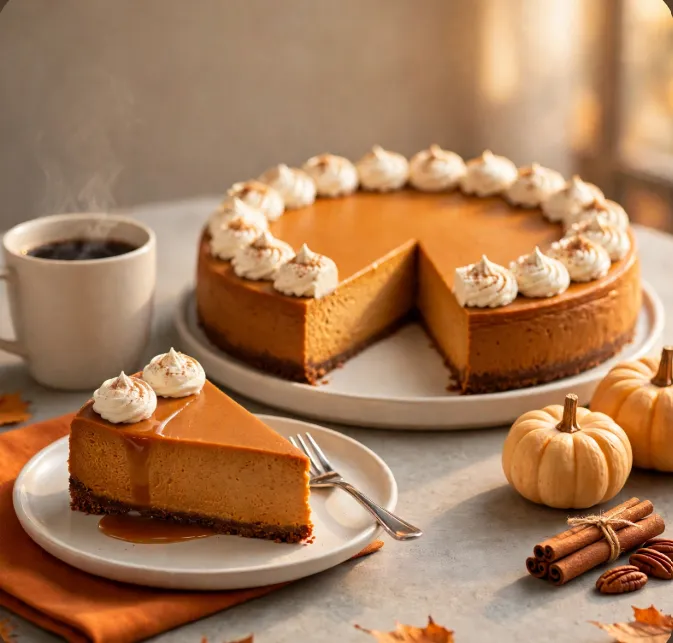
This pumpkin cheesecake is what came out of that afternoon. A crunchy, spiced gingersnap crust holds a dense, velvety filling that tastes like pumpkin pie and classic cheesecake agreed to share one plate. While it bakes, the kitchen smells like cinnamon, ginger, and warm brown sugar, and every chilled slice cuts clean and silky. It is a dessert, not a meal, and that is the whole point: one slice with a cup of coffee and the craving is handled.
Below is everything you need to bake it at home without cracks, soggy crust, or guesswork.
Why This Recipe Works
- The gingersnap crust adds built-in spice, because the cookies already carry ginger and molasses that echo the pumpkin filling.
- Brown sugar deepens the flavor, since its molasses notes taste warmer and rounder than plain white sugar alone.
- A spoonful of cornstarch prevents cracks, as it helps the eggs set gently instead of tightening and splitting the surface.
- Sour cream keeps the texture silky, because its tang and fat balance the dense cream cheese and the earthy pumpkin purée.
- A water bath bakes it evenly, as the steamy, moist heat stops the edges from overbaking before the center sets.
- It is made ahead on purpose, since this pumpkin cheesecake needs an overnight chill, which frees up your oven on the big day.
Ingredient Notes
- Gingersnap cookies: form the crisp, spiced base; choose a crunchy store brand, not soft-baked ones, so the crust stays firm.
- Unsalted butter: binds the crumbs into a pressable crust; melt it fully so every crumb gets coated.
- Brown sugar (crust): adds a little caramel sweetness and helps the crust hold together as it bakes.
- Cream cheese: the creamy backbone of the filling; use full-fat bricks, not the spreadable tub kind, and let them soften completely.
- Light brown sugar (filling): sweetens and adds a gentle molasses depth; pack it firmly when measuring.
- Pumpkin purée: gives color, body, and earthy flavor; buy 100% pure pumpkin, not pumpkin pie filling, which is already sweetened and spiced.
- Sour cream: smooths the texture and adds a light tang; full-fat works best.
- Eggs: set the filling into a sliceable custard; bring them to room temperature so they blend in without lumps.
- Cornstarch: acts as insurance against cracks and a weepy center.
- Pure vanilla extract: rounds out the spices and the dairy.
- Pumpkin pie spice: brings the classic fall warmth; check that your jar is fresh, since old spices taste flat.
- Fine salt: sharpens every other flavor so the cheesecake does not taste one-note sweet.
Substitutions Table
| Ingredient | Substitute | Effect on Result |
|---|---|---|
| Gingersnap cookies | Graham crackers + ½ tsp ground ginger | Milder, sweeter crust with less spice |
| Gingersnap cookies | Biscoff cookies | Crisp crust with caramelized, cinnamon flavor |
| Sour cream | Full-fat plain Greek yogurt | Slightly tangier and a touch firmer |
| Light brown sugar | Granulated sugar | Lighter color and less caramel depth |
| Pumpkin purée | Roasted butternut squash purée | Similar texture, slightly sweeter and smoother |
| Pumpkin pie spice | 1½ tsp cinnamon, ½ tsp ginger, ¼ tsp nutmeg, ⅛ tsp cloves | Same warm flavor, easy to adjust to taste |
| Cornstarch | All-purpose flour (same amount) | Works fine; texture is a little less silky |
Equipment Needed
- 9-inch springform pan: the removable sides let you lift out clean slices.
- Heavy-duty aluminum foil: wrap the pan in two layers so no water seeps into the crust.
- Roasting pan: large enough to hold the springform pan and hot water halfway up its sides.
- Food processor or zip-top bag and rolling pin: for fine, even cookie crumbs.
- Stand mixer or hand mixer with paddle/beaters: keep it on low to medium speed to avoid whipping in air.
- Rubber spatula: for scraping down the bowl so no lumps of cream cheese hide at the bottom.
- Measuring cups and spoons
- Thin, sharp knife: dip it in hot water between cuts for neat slices.
Step-by-Step Directions
1. Prep the pan and oven
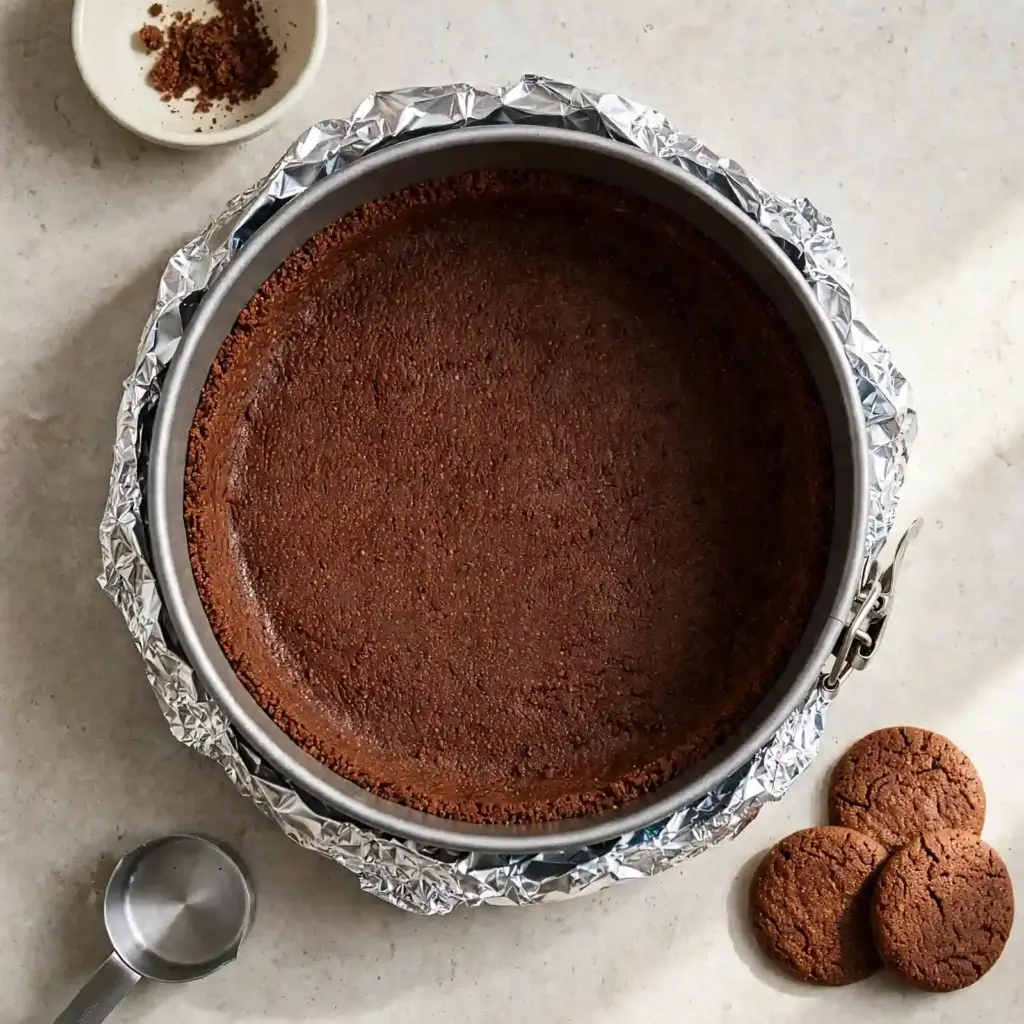
Heat the oven to 325°F, wrap the outside of the springform pan in two layers of heavy-duty foil, and set a kettle of water to boil.
Why: a lower temperature and a leak-proof wrap are the first line of defense against cracks and a soggy crust.
2. Make the gingersnap crust
Pulse the cookies into fine crumbs, then mix them with the melted butter and brown sugar until the texture looks like wet sand.
How to know: squeeze a handful; it should hold its shape without crumbling apart.
3. Press and pre-bake the crust
Press the crumbs firmly into the bottom and about 1 inch up the sides, then bake for 10 minutes and let it cool while you mix the filling.
Why: pre-baking sets the butter so the crust stays crisp under the creamy filling.
4. Beat the cream cheese
Beat the softened cream cheese on medium-low for 2 to 3 minutes until completely smooth, scraping the bowl twice.
How to know: no tiny lumps should remain; cold cream cheese is the main cause of a lumpy pumpkin cheesecake.
5. Add sugar, pumpkin, and sour cream
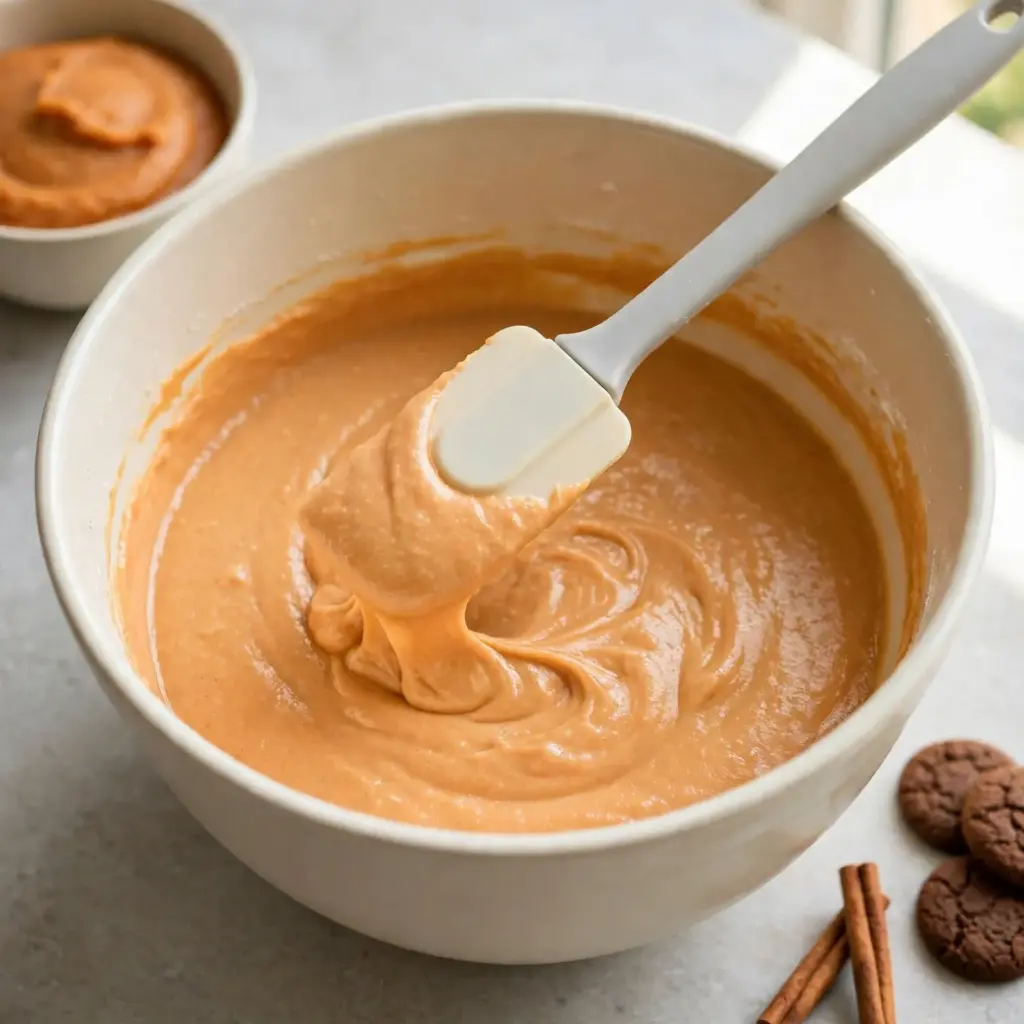
Mix in the brown sugar, then the pumpkin purée, sour cream, cornstarch, vanilla, pumpkin pie spice, and salt on low speed until just blended.
6. Add the eggs one at a time
Add each egg on low speed and stop mixing as soon as the yellow disappears.
Why: overbeating after the eggs go in traps air, which puffs up in the oven and then cracks as it cools.
7. Fill the crust
Pour the filling over the cooled crust, smooth the top with a spatula, and tap the pan on the counter a few times to release air bubbles.
8. Set up the water bath
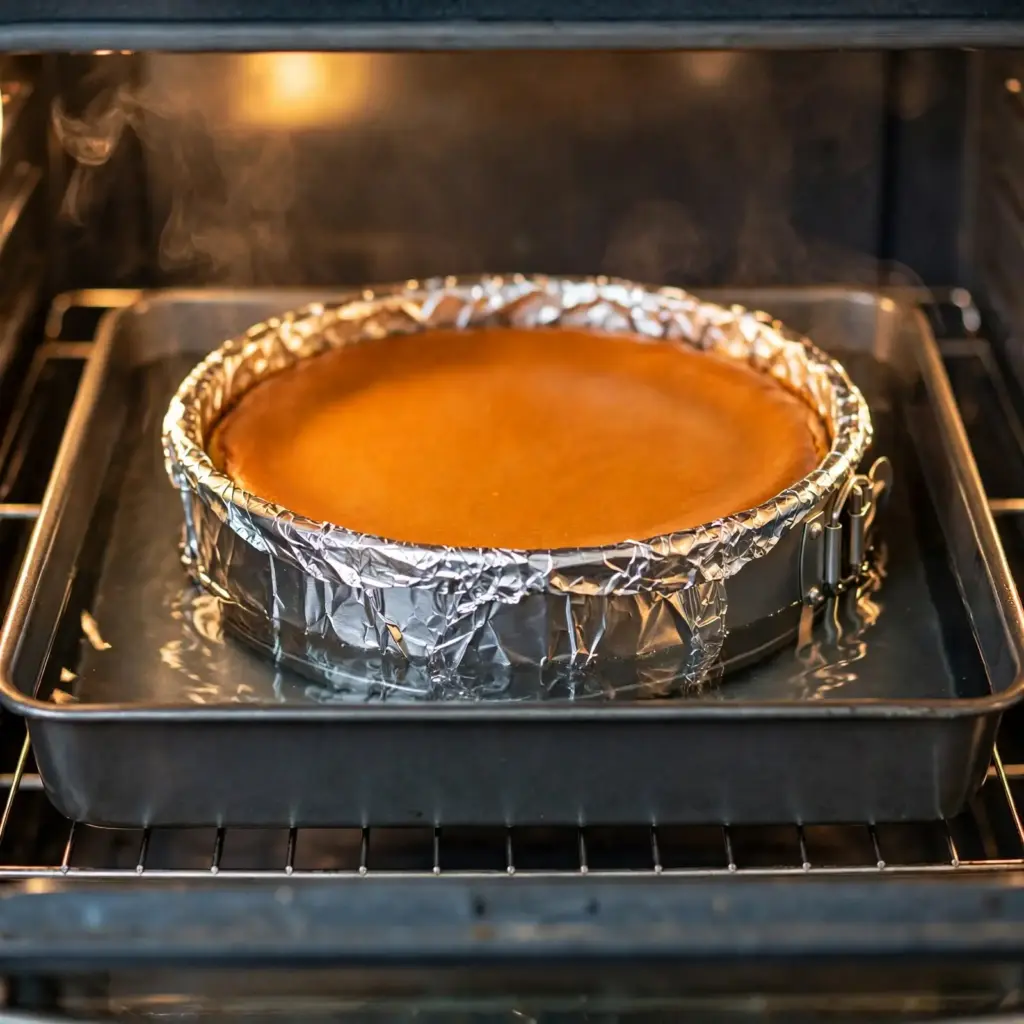
Place the springform pan in the roasting pan, put both on the oven rack, and carefully pour hot water into the roasting pan until it reaches halfway up the sides.
Why: filling the water bath on the rack keeps you from carrying a sloshing pan across the kitchen.
9. Bake until the center wobbles
Bake for 70 to 80 minutes, until the edges look set and slightly puffed but a 3-inch circle in the middle still jiggles like gelatin when you nudge the pan.
How to know: if the center looks liquid and ripples, it needs more time; a gentle wobble means it is done.
10. Cool slowly, then chill
Turn off the oven, crack the door open, and leave the cheesecake inside for 1 hour; then cool on the counter for 1 hour and refrigerate for at least 6 hours or overnight.
Why: a sudden temperature drop is the most common reason a cheesecake splits down the middle.
Recipe Card
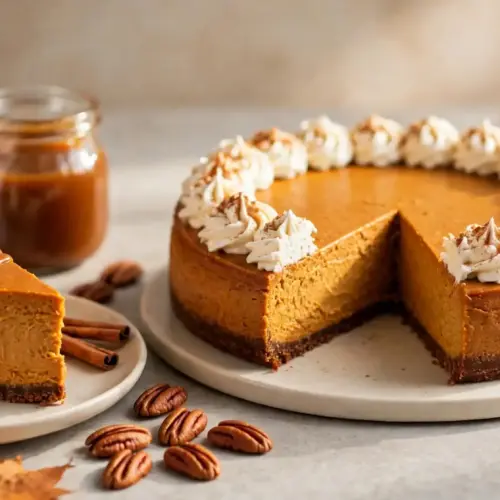
Pumpkin Cheesecake
Ingredients
For the gingersnap crust
- 2 cups about 200 g finely crushed gingersnap cookies
- 5 tablespoons unsalted butter melted
- 2 tablespoons light brown sugar
For the pumpkin filling
- 24 oz three 8-oz blocks full-fat cream cheese, softened
- 1 cup packed light brown sugar
- 1½ cups pure pumpkin purée
- ½ cup full-fat sour cream room temperature
- 2 tablespoons cornstarch
- 2 teaspoons pure vanilla extract
- 2 teaspoons pumpkin pie spice
- ¼ teaspoon fine salt
- 3 large eggs room temperature
Instructions
- Heat the oven to 325°F. Wrap the outside of a 9-inch springform pan in two layers of heavy-duty foil. Boil a kettle of water.
- Mix the gingersnap crumbs, melted butter, and 2 tablespoons brown sugar. Press firmly into the bottom and 1 inch up the sides of the pan. Bake 10 minutes, then cool.
- Beat the cream cheese on medium-low for 2 to 3 minutes until completely smooth, scraping the bowl.
- Beat in 1 cup brown sugar. Add the pumpkin purée, sour cream, cornstarch, vanilla, pumpkin pie spice, and salt; mix on low until blended.
- Add the eggs one at a time on low speed, mixing only until each disappears.
- Pour the filling into the crust, smooth the top, and tap the pan to release bubbles.
- Set the springform pan in a roasting pan on the oven rack. Pour hot water into the roasting pan halfway up the sides.
- Bake 70 to 80 minutes, until the edges are set and the center still wobbles slightly.
- Turn off the oven, crack the door, and leave the cheesecake inside for 1 hour. Cool on the counter 1 hour, then refrigerate at least 6 hours or overnight.
- Run a thin knife around the edge, release the spring-form, and slice with a hot, dry knife.
Notes
- All cold ingredients must be at room temperature before mixing for a lump-free filling.
- Use pumpkin purée, not pumpkin pie filling.
- The cheesecake keeps 5 days in the fridge and up to 2 months in the freezer.
- Nutrition values are estimates per slice and will vary by brand.
Nutrition Facts (per slice, 1 of 12, estimated)
Calories: 445 · Total Fat: 29 g · Saturated Fat: 17 g · Cholesterol: 120 mg · Sodium: 315 mg · Carbohydrates: 39 g · Fiber: 1 g · Sugar: 28 g · Protein: 6 g · Vitamin A: high (from pumpkin)
Tips for the Best Results
Ingredient Tips
- Set the cream cheese, eggs, and sour cream on the counter 2 hours before baking; they should feel cool, not cold.
- Blot the pumpkin purée between paper towels for 5 minutes if it looks watery, so the filling sets firmly.
- Pulse the gingersnaps until no pieces bigger than a lentil remain, or the crust will crumble when sliced.
- Taste a pinch of your pumpkin pie spice before using it; if the aroma is faint, add an extra ½ teaspoon.
Mixing Tips
- Beat the cream cheese alone first; adding sugar to lumpy cream cheese locks the lumps in.
- Scrape the bottom of the bowl, not just the sides, after every addition.
- Switch to low speed the moment the eggs go in and stop as soon as they vanish.
- Let the mixed batter rest 5 minutes and pop any surface bubbles with a toothpick before pouring.
Baking Tips
- Use a roasting pan that leaves at least 1 inch of space around the springform pan so water circulates.
- Keep the oven door closed for the first 60 minutes; opening it drops the heat and causes uneven baking.
- Run a thin knife around the edge 10 minutes after the cheesecake comes out of the oven, so it can shrink without tearing.
- Chill uncovered for the first 2 hours, then cover; trapping steam early leaves water droplets on top.
Troubleshooting Guide
Why did my pumpkin cheesecake crack on top?
Cracks usually come from overbaking, beating too much air into the eggs, or cooling too fast. Pull it while the center still wobbles, mix the eggs on low, and let it cool slowly in the turned-off oven; a crack can also be hidden under whipped cream.
Why is my cheesecake filling lumpy?
The cream cheese was too cold when you started mixing. Next time soften it fully, and if lumps appear now, press the batter through a fine-mesh sieve before pouring.
Why is the crust soggy?
Water from the bath probably leaked through the foil, or the crust was not pre-baked. Use two layers of wide heavy-duty foil, or set the springform pan inside a slightly larger cake pan before placing it in the water.
Why is my pumpkin cheesecake still runny in the middle?
It was underbaked or not chilled long enough. A center that ripples like liquid needs 5 to 10 more minutes, and the filling only finishes setting after at least 6 hours in the fridge.
Why does my cheesecake taste bland?
Old spices or skipping the salt is the usual cause. Use a fresh jar of pumpkin pie spice and do not leave out the ¼ teaspoon of salt, which makes the pumpkin and brown sugar taste brighter.
Flavor Variations
Pumpkin Swirl Cheesecake
Set aside 1 cup of plain filling before adding the pumpkin and spices, then swirl it through the orange batter with a knife for a marbled top.
Maple Pecan Pumpkin Cheesecake
Replace ¼ cup of the brown sugar with pure maple syrup and finish each slice with candied pecans.
Chocolate Pumpkin Cheesecake
Use a chocolate cookie crumb crust and drizzle melted dark chocolate over the chilled top.
Salted Caramel Pumpkin Cheesecake
Spoon thick salted caramel sauce over the cheesecake just before serving and sprinkle with flaky sea salt.
Chai-Spiced Pumpkin Cheesecake
Add ½ teaspoon ground cardamom and a pinch of black pepper to the pumpkin pie spice for a cozy chai twist.
Serving Options
Classic Whipped Cream and Cinnamon
Pipe lightly sweetened whipped cream around the edge and finish with a whisper of cinnamon for a bakery-style look.
Holiday Dessert Board
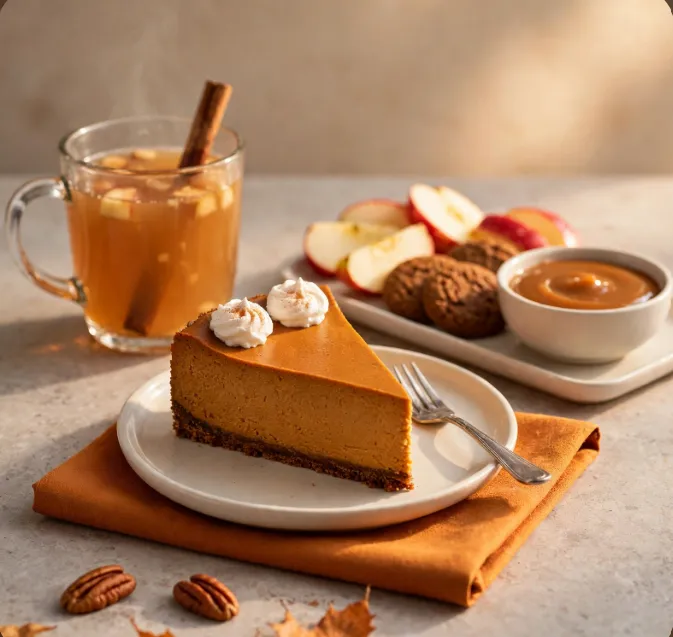
Cut the pumpkin cheesecake into small squares and set them out with apple slices, gingersnaps, and caramel dip for an easy grazing board.
With a Warm Drink
Serve a slice alongside hot apple cider, a pumpkin spice latte, or plain black coffee to balance the richness.
Thanksgiving Dessert Table Centerpiece
Leave the cheesecake whole on a cake stand, crown it with sugared cranberries and rosemary sprigs, and let guests watch you cut it.
Christmas Morning Treat
Pair a thin slice with fresh berries for a sweet, make-ahead bite while the kids open presents.
Storage and Freezing
Room Temperature Storage
Pumpkin cheesecake should not sit at room temperature for more than 2 hours, since it is made with eggs and dairy. For a party, set it out about 20 minutes before serving and return leftovers to the fridge, covered, where they keep for up to 5 days.
Freezing
Chill the cheesecake overnight first, then freeze it whole or in slices on a tray until firm. Wrap each piece tightly in plastic wrap and then foil, and freeze for up to 2 months; add whipped cream or caramel only after thawing.
Thawing
Move the wrapped cheesecake to the refrigerator and thaw overnight, about 8 to 12 hours for a whole cake or 3 to 4 hours for slices. Avoid thawing on the counter, which can make the crust damp and the filling sweat.
Frequently Asked Questions
Can I make pumpkin cheesecake without a water bath?
Yes. Place a pan of hot water on the rack below the cheesecake instead; the steam still protects the filling. Expect a slightly firmer edge and a bit more risk of small cracks.
How far ahead can I make pumpkin cheesecake for Thanksgiving?
You can bake it up to 3 days ahead and keep it covered in the fridge. It actually slices better on day two, once the flavors have settled.
Can I use canned pumpkin pie filling instead of pumpkin purée?
It is not recommended. Pie filling already contains sugar and spices, so the cheesecake turns overly sweet and the spice level becomes hard to control.
How do I know when pumpkin cheesecake is done baking?
The edges should look set and slightly puffed while a 3-inch circle in the center still jiggles. An instant-read thermometer in the center should read about 150°F.
Can I make this cheesecake in a regular pie dish?
Yes, a deep 9-inch pie dish works. Reduce the bake time to about 50 to 60 minutes and expect some extra filling, which you can bake in a ramekin.
Why do you add cornstarch to cheesecake?
Cornstarch helps the eggs set more gently. It makes the filling less likely to crack and keeps it from weeping moisture after chilling.
Can I freeze pumpkin cheesecake with the crust?
Yes. The gingersnap crust freezes well as long as the cheesecake is wrapped tightly, and it stays crisp after thawing in the fridge.
Related Recipes
If this pumpkin cheesecake has you in a holiday baking mood, these are worth a spot on your list next: